

From veneer selection to packaging, every stage of an engineered wood flooring order can affect appearance, specification compliance, delivery, and commercial risk. For procurement teams, distributors, contractors, and project owners, the safest approach is to approve the product in stages rather than judge the finished carton alone. This guide explains the main decisions to make before production, during manufacturing, and before shipment. YEHUI supplies multi-layer engineered wood flooring and distinctive artistic parquet for specification-led trade orders.
What Should Buyers Confirm Before Flooring Production Begins?
Before production starts, convert the design brief into measurable product requirements. Samples, drawings, finish references, quantities, and packaging instructions should be agreed in writing.
Match Veneer Appearance With The Project Specification
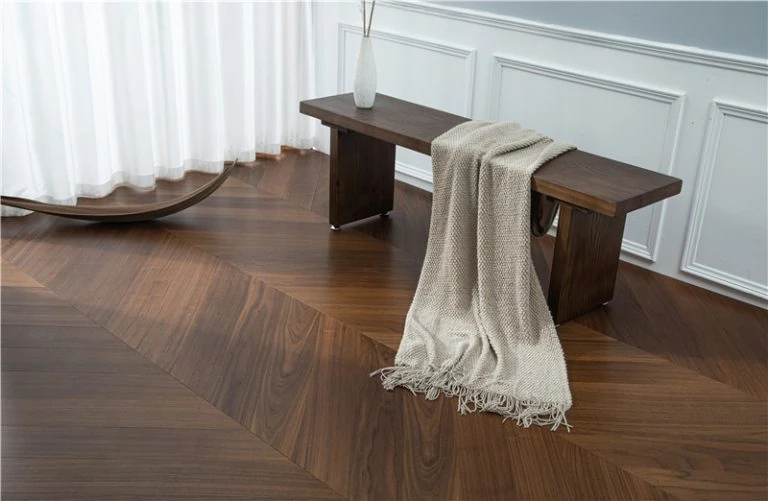
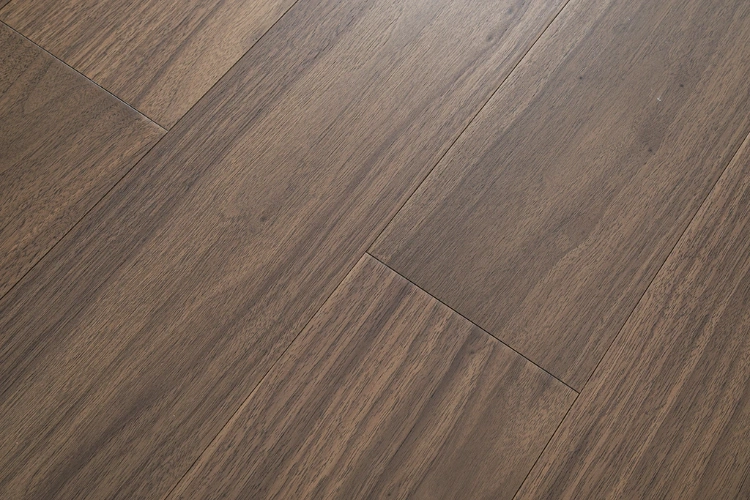
Start with the visible surface. Define the required wood species, grain direction, color range, surface character, finish, and acceptable natural variation. A commercial buyer should not rely on a small photograph or a general description such as “warm oak.” Lighting, board position, grain movement, and surface treatment can all change the final appearance.
Request an approved sample, sample board, or reference image set that can be used during production review. The approval should identify which differences are acceptable and which are not. If several tones are required within one order, record the intended range and how those tones should be distributed.
This step is central to from veneer selection to packaging, because an attractive sample has little commercial value if the production batch does not match the approved visual standard.
Verify The Multi-Layer Plywood Core And Overall Structure
Engineered wood flooring uses real-wood veneer over a multi-layer plywood core, not HDF. Buyers should confirm the core material, total thickness, board dimensions, layer construction, and any project-specific structural requirements before placing a bulk order.
The All Birch Plywood Core wood Flooring | QH1925| YEHUI range includes a 1210X165X15mm format, with other sizes available. Its listed core choices include multi-layer Eucalyptus Plywood, all birch, and other options. Various thicknesses and finishes, including brushed, hand-scraped, smoked, and UV-coated surfaces, are available.
Do not approve a product from its name alone. Ask for a written specification covering veneer, core, thickness, dimensions, finish, tolerances, and inspection requirements.
Select The Pattern According To Commercial Design Requirements
Choose the pattern according to the project drawings and installation plan. Standard engineered wood flooring suits buyers who need a straightforward, specification-led plank format. Herringbone creates a Z-shaped directional pattern, while Chevron wood flooring creates a V-shaped pattern.
For a V-shaped layout, Chevron flooring – Luxury wooden flooring | YEHUI offers a stated 530x127mm format, a 15mm plywood base, and 3mm walnut or oak veneer. OEM/ODM support, samples, private labeling, and batch tracking are also available for suitable trade orders.
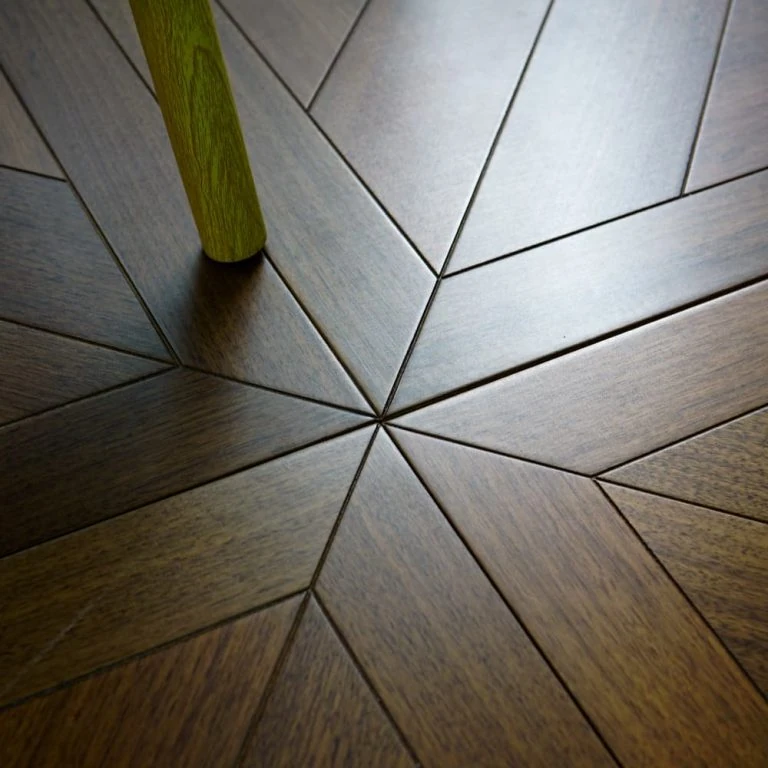
Unique artistic parquet is more visually distinctive than standard herringbone. It can suit premium design specifications, but greater manufacturing coordination and material waste may affect pricing. Confirm the geometry, repeat, edge treatment, and joining method before approval.
How Is Engineered Wood Flooring Manufactured And Controlled?
The manufacturing route should connect the approved appearance and structure to the final packed order. Buyers should ask for clear handoffs between materials, processing, inspection, and shipment preparation.
Explain Veneer Preparation, Core Assembly, And Pressing
A typical production logic begins with veneer preparation and inspection, followed by bonding, multi-layer plywood assembly, pressing, and dimensional stabilization. The important procurement issue is not simply the sequence; it is whether the approved materials and sample remain traceable through the order.
Ask the supplier to identify the approved veneer and core, describe the bonding and pressing stages, and assign batch or order references. Keep the approved sample, technical drawing, and purchase-order specification together. This creates a practical record for production checks and later claims.
In from veneer selection to packaging, traceability matters because appearance, structure, and quantity can be reviewed only when each stage is tied to the same order reference.
Review Machining, Surface Finishing, And UV Coating
Machining affects board dimensions, edge alignment, pattern accuracy, and the consistency of the tongue-and-groove profile. For herringbone and parquet, piece orientation and repeat accuracy also require attention. These details should be checked against the approved drawing rather than judged informally.
Surface finishing should follow the agreed sample. Available finish choices may include natural, smoked, brushed, hand-scraped, lacquered, or UV-coated treatments, depending on the selected product. UV coating is applied during production; it is not a treatment carried out after installation.
Before approval, clarify the finish appearance, cleaning responsibilities, surface acceptance criteria, and any available technical records. Avoid assuming that a finish carries a performance rating unless that rating is specifically documented for the selected product.
Build Quality Checks Around The Buyer’s Acceptance Criteria
Set inspection points before production begins. These should cover veneer appearance, dimensions, thickness, surface finish, pattern alignment, edge condition, packaging, and quantity.
A visual sample approval is not the same as a complete production acceptance plan. Define inspection timing, sample size, defect tolerances, documentation, and responsibility for unresolved deviations. For larger orders, request photographs or records linked to the relevant batch where appropriate.
The more specific the acceptance criteria, the easier it is for both parties to distinguish a natural variation from a genuine specification deviation.
How Should Buyers Evaluate Customization And Product Fit?
Product selection should follow the project’s commercial purpose: repeatable bulk supply, a directional pattern, or a distinctive decorative floor with more coordination requirements.
Use Engineered Wood Flooring For Specification-Led Bulk Supply
The QH1925 flooring is a practical reference for buyers seeking a multi-layer engineered wood flooring specification. Oak, Walnut, Maple, and other appearance options are available, together with multi-layer Eucalyptus Plywood, all birch, or other core choices. Private labeling and branding, various thickness options, bulk-order pricing, and several finish selections support trade sourcing.
Your purchase specification should state the veneer, core, size, thickness, finish, quantity, labeling, inspection process, and packaging requirements. This is more reliable than ordering by a visual name or a single product photograph.
Use Herringbone Or Chevron For Directional Patterns
Use herringbone when the design requires a Z-shaped pattern and Chevron when it requires a V-shaped pattern. Review piece orientation, repeat consistency, edge matching, and coordination with the installation drawings.
Pattern flooring should use the specified tongue-and-groove construction. Confirm the joint profile, dimensions, machining tolerances, finish system, and packaging arrangement for the exact order. YEHUI does not provide installation service, so the buyer should assign installation coordination and site responsibility separately.
Reserve Artistic Parquet For Distinctive Design Specifications
Parquet Flooring-Tang Yun | YEHUI is suited to buyers requiring geometric artistic parquet, which has diamond, rhombus, and interlaced grid geometries.
Special cuts, inlay shapes, and border requests can be discussed for project requirements. Finish choices include smoked, carbonized, natural oil, and lacquered surfaces. Because artistic parquet normally involves more manufacturing coordination and material waste than standard herringbone, allow for a different commercial cost structure. Confirm the tongue-and-groove joining details before purchase.
How Can Buyers Reduce Production, Packaging, And Shipment Risk?
The final risk review should cover approvals, carton protection, traceability, inspection, delivery responsibilities, and claims handling.
Approve Samples And Specifications Before Bulk Production
Use a documented approval sequence: project brief, technical specification, veneer and finish sample, pattern confirmation, packaging requirements, and purchase-order sign-off. Verbal approval creates avoidable uncertainty around color variation, grain direction, dimensions, custom shapes, and labeling.
Request the approved sample reference, product drawing, packing-list format, inspection plan, carton labeling requirements, and after-sales responsibilities. These documents help procurement, production, logistics, and receiving teams work from one version of the order.
Check Packaging For Product Protection And Traceability
Packaging should protect finished surfaces, edges, pattern components, and cartons during handling and international transport. Confirm the quantity per package, carton markings, pallet or loading arrangement, moisture-protection measures, and batch identification where applicable.
The shipment should be checked against the purchase order before dispatch. Packaging instructions should also state how shortages, visible damage, or incorrect labels will be recorded at receiving.
Clarify Inspection, Delivery, And After-Sales Responsibilities
Distinguish between supplier inspection, buyer-arranged inspection, pre-shipment review, and documentation supplied with the order. Agree how specification deviations, shortages, transit damage, and replacement decisions will be reported and resolved.
Warranty terms should be reviewed for the selected product rather than applied broadly to every flooring order. A lower-risk from veneer selection to packaging process gives every handoff a clear owner, from approved veneer and structure to inspected, labeled, shipment-ready cartons.
If you have a project specification, target pattern, required dimensions, finish expectations, estimated quantity, packaging needs, or inspection plan, Contact Us to discuss the appropriate engineered wood flooring or artistic parquet route.
FAQ
What Should A B2B Buyer Request Before Ordering Engineered Wood Flooring?
Request an approved sample, complete product specification, veneer and core details, dimensions, thickness, finish, tolerances, inspection criteria, packaging instructions, labeling requirements, delivery terms, and after-sales responsibilities. These records give from veneer selection to packaging a documented path that procurement and receiving teams can review.
How Can Buyers Compare Herringbone, Chevron, And Artistic Parquet?
Compare the required pattern, piece orientation, dimensions, joint profile, finish, production coordination, and material use. Herringbone forms a Z-shaped pattern, Chevron forms a V-shaped pattern, and artistic parquet offers more distinctive geometric designs. Artistic parquet may cost more because of manufacturing complexity and material waste.
What Packaging And Inspection Details Should Be Written Into The Purchase Order?
Specify carton quantities, markings, pallet or loading requirements, moisture protection, batch references, inspection timing, sample size, defect tolerances, documentation, and claims procedures. Also state who records transit damage, shortages, or specification deviations after delivery.

 English
  Spanish
  Arabic
  French
  German