

A flooring quotation can give a minimum and maximum length without revealing how much of each length will arrive. This gap matters to an importer comparing offers: two orders with the same endpoints can contain very different proportions of short pieces.
For fixed length flooring, the purchase order needs the selected length and any agreed exceptions. For random length flooring, it also needs the length distribution, the basis used to calculate proportions and the quantity over which those proportions apply. An average alone cannot answer all three key questions:
- What lengths occur.
- How proportions are calculated.
- To which quantity those proportions
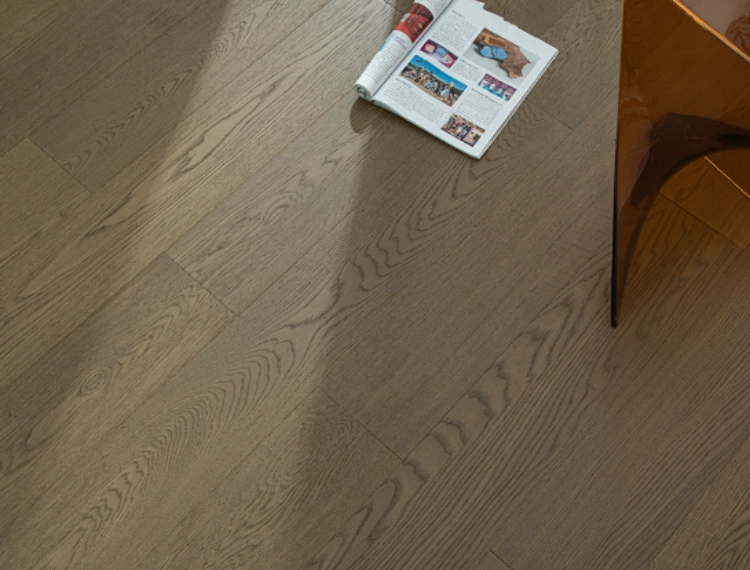
Fixed and random lengths need different order fields
The words “fixed” and “random” are useful starting descriptions. Neither replaces an agreed product schedule. The comparison below identifies what a purchasing team should resolve before treating two offers as equivalent.
| Order field | Fixed-length selection | Proposed mixed-length selection |
| Length description | Exact nominal length for each model | Individual lengths or clearly defined length bands |
| Proportion | Confirm whether all pieces have that length | State each share and whether it is by count or area |
| Exceptions | Identify any permitted shorter pieces | Identify any pieces outside the agreed bands |
| Scope | State which product and quantity the rule covers | State whether proportions apply per carton, delivery or complete order |
A fixed length starts with the selected model
YEHUI offers oak QH plank options, including QH1901, QH1902, QH1903, QH1905, QH1906 and QH1909, with a length of 1,210 mm and a width of 165 mm. Its black-walnut QH1921, QH1923 and QH1925 options share those stated length and width dimensions.
The QH1903 Engineer wood flooring model gives a buyer a specific starting point for a length enquiry. The order should still confirm the current specification and whether any shorter pieces are permitted. A product dimension does not, by itself, define an exception policy.
YEHUI also offers oak Herringbone models R1101, R1506 and R1106 at 450 mm long and 75 mm wide. The R8821 and R8825 black-walnut Herringbone options have the same stated length of 450 mm and width of 75 mm.
These are separate product choices. Combining their dimensions into a single “available lengths” range would obscure the selected model and pattern. A fixed-length order should retain that product identity throughout the enquiry and confirmation.
The distributor may have advertised one particular format to its own customers. In that situation, the order team has to decide whether a shorter piece can enter the assortment at all. An average-length requirement cannot protect a promise of identical lengths. Where short pieces are acceptable, the order needs their allowance written beside the named format, whatever description appears on the quotation.
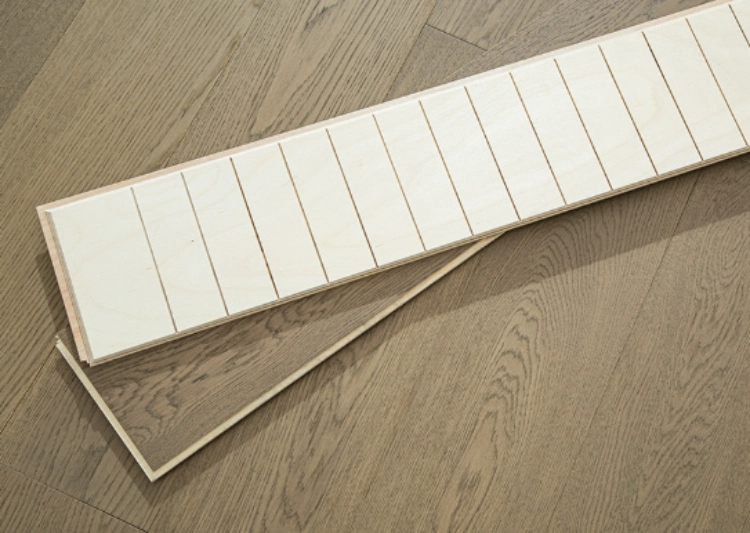
A mixed-length request needs a denominator
“Up to 40% short boards” leaves two questions unanswered: what counts as short, and 40% of what? A buyer might mean pieces shorter than a named threshold, measured as a percentage of total pieces. Another might mean their share of the ordered face area.
Length bands also need boundaries. If one band ends at 900 mm and the next begins at 900 mm, the schedule must say where a piece exactly 900 mm long belongs. Each piece should enter one band only.
The proposed mix still needs a supplier response. A product page might give a range of possible sizes, with each size ordered separately. It might describe several options for the same design. Neither reading establishes what will be mixed in a carton.
There is another distinction to resolve in the correspondence: is a percentage a planning estimate or a limit for acceptance? A reply saying “normally around this share” leaves that question open. The purchasing team needs a confirmed limit if it intends to use the figure when accepting delivery, including any permitted variation.
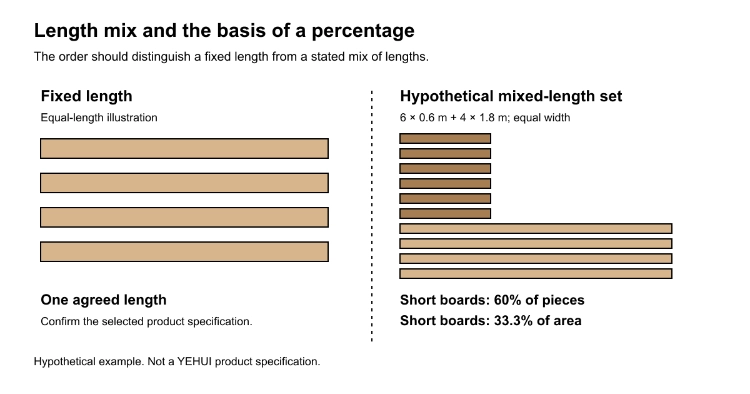
Six short pieces can mean 60% by count and 33.33% by area
Consider a hypothetical group of ten rectangular pieces: six are 0.6 m long and four are 1.8 m long. All are 0.15 m wide. These numbers illustrate the calculation; they are not a YEHUI product specification or shipment record.
| Length group | Pieces | Combined length | Calculated face area | Share by count | Share by area |
| 0.6 m pieces | 6 | 3.6 m | 0.54 m² | 60% | 33.33% |
| 1.8 m pieces | 4 | 7.2 m | 1.08 m² | 40% | 66.67% |
| Total | 10 | 10.8 m | 1.62 m² | 100% | 100% |
The short-piece count share is 6 ÷ 10, or 60%. Its area share is 0.54 ÷ 1.62, or about 33.33%. Neither percentage is wrong. They describe different aspects of the same group.
An order clause that says only “short pieces: maximum 40%” would produce opposite acceptance decisions in this example. The count exceeds 40%; the area does not. Naming the denominator is therefore part of the specification, rather than a detail to settle after delivery.
Average length cannot replace the distribution
The arithmetic mean in this example is total length divided by piece count: 10.8 m ÷ 10 = 1.08 m. Ten pieces each measuring 1.08 m would have the same mean, despite containing neither a 0.6 m piece nor a 1.8 m piece.
An average has a useful role when both parties have agreed to it. The problem comes when it is asked to do a second job: controlling the number of short pieces. That needs a separate requirement. The calculation record must also show whether it represents the delivery or a defined sample taken from it.
Width belongs in the area calculation
Equal width allows the width term to cancel when calculating area shares. With different widths, each group’s length must be multiplied by its own width before the areas are added.
YEHUI’s JR9102, JR9103 and JR9105 black-walnut Herringbone options measure 600 mm long by 92 mm wide. Its oak JR9110, JR9111, JR9113 and JR9115 options have the same stated dimensions. The oak S6001, S6005, S6006 and S6008 Herringbone options are also 600 mm long, with a width of 124 mm.
These separate selections show why a length field cannot identify the entire format. Their stated dimensions should not be treated as confirmed saleable coverage or combined into a mixed-width order without agreement. NIST’s SI units guidance distinguishes length in metres from area in square metres; the order schedule should keep those quantities separate too.
Agree how the length description will be checked
Before order acceptance, the parties should define the measurement basis, any permitted dimensional variation and the records used to check the agreed distribution. A carton photograph may show several lengths without proving their proportions across a delivery. A tally needs the relevant piece lengths, widths where required, and its sampling scope.
YEHUI’s production includes cutting, drying, moisture control, fine sanding and sizing, as well as surface treatment and lacquer finishing. Machine checks and manual inspection cover dimensions, thickness, moisture content and stability. A buyer’s proposed length tolerance or distribution check still requires separate agreement; those production steps do not specify either one. YEHUI’s packing process includes inspection and screening of individual flooring pieces before they are packed.
For phased deliveries, the percentage scope deserves particular attention. Meeting a share across the complete order does not necessarily meet it in each release. If release-level consistency matters, the purchasing team should request this scope explicitly. Any later change to the length schedule should identify the affected quantity and replace the earlier description in the order record.
Turn a length preference into a product enquiry
YEHUI provides product consultation and customization based on the buyer’s budget, style, dimensions and requirements. Its services also include design, measurement and sampling support. These provide a route for discussing a proposed size requirement, while the requested supply format remains subject to confirmation.
An enquiry for SC7602-F flooring, for example, should name the selected model and ask which length configuration is available for the proposed order. It should not assume a random-length mix from a range of possible dimensions. The useful reply is specific: confirmed lengths, any permitted exceptions, the basis for each proportion and the quantity to which that agreement applies.
Frequently Asked Questions
What should a purchase order specify for fixed-length flooring?
It should state the exact nominal length for each model and clarify whether shorter pieces are permitted. Any exceptions should be agreed upon before the order is confirmed.
How should random-length flooring proportions be specified?
The purchase order should define the length ranges, the percentage for each range, and whether the percentages are calculated by piece count or floor area. It should also state whether the figures apply per carton, delivery or complete order.
Is average length enough to control the number of short flooring pieces?
No. Two batches can have the same average length but very different length distributions. Buyers should specify the acceptable short-piece proportion separately and agree on how it will be calculated.


 English
 Spanish
 Arabic
 French
 German