

A worn parquet floor does not always need to be removed. Sometimes it only needs cleaning, a small repair, or a new surface coat. If you want to restore parquet flooring, you need to check whether the old floor can still give a clean and stable result.
This guide will cover how to restore parquet flooring without replacing it, where DIY work is still safe, and when a new parquet product makes more sense.
YEHUI supplies Parquet Flooring, Engineer wood flooring, Herringbone Flooring, and Chevron wood flooring. For renovation projects, the point is simple: repair when the floor is still worth saving, replace when repair will only hide the problem for a short time.
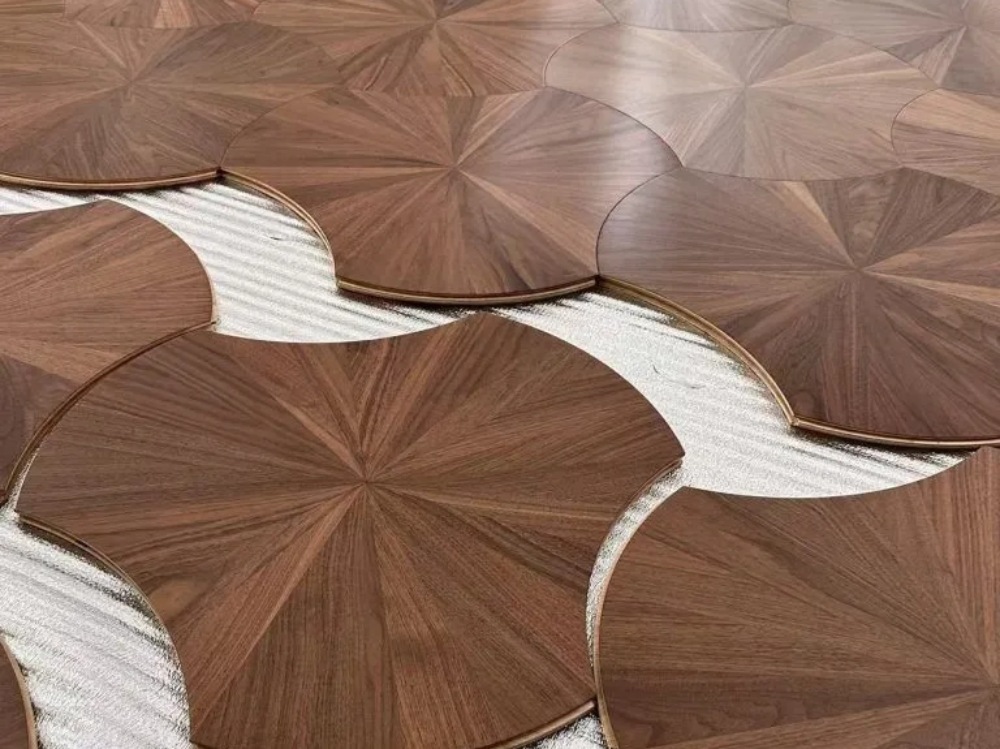
What Should You Check Before You Restore Parquet Flooring?
Do not judge the floor from one corner. Walk around the room. Check it in daylight. Look at the surface from a low angle. A dull finish is one thing. Loose blocks or repeated swelling are another.
Surface Wear and Dull Finish
If the floor is flat but looks grey, cloudy, or tired, it may only have surface wear. In this case, cleaning and polishing should come before sanding.
This is also where people ask how to bring shine back to parquet flooring. If the finish is still stable, a careful clean and a fresh surface treatment may bring back enough depth and warmth.
Scratches, Small Dents, and Local Marks
Small scratches usually sit in the finish layer. These can often be reduced with local treatment or light recoating. Deep scratches need more care. If the mark cuts through the surface or exposes the lower layer, simple polishing will not solve it.
For how to repair scratches in parquet flooring, the practical rule is this: light marks can be treated locally, but damaged blocks, raised corners, and broken pattern areas need closer checking.
Loose Blocks and Open Joints
Loose blocks are not just a surface problem. One or two moving pieces may be repaired. If several areas move, the floor may have a bonding issue. Filling gaps too early can also be a mistake, because the same gaps may open again.
A quick site check helps avoid wasted repair costs. If the floor is only dull or lightly scratched, restoration is worth testing. If blocks are lifting in several places, or stains keep returning, replacement may be the safer route.
How Can You Restore Parquet Flooring Without Replacing It?
Start with the least aggressive method. Many floors are damaged further because someone sands too early. A small test area is useful, especially for projects where the finish must look even across the room.
Clean First, Then Repair
Remove dust and grit first. Grit can scratch the surface during cleaning. Then use a suitable damp cleaning method, not a wet one. Too much water can make gaps, swelling, and lifting worse.
Let the floor dry fully. Then check the color again. If the floor already looks clearer, you may only need polishing or recoating.
Polish or Recoat Stable Surfaces
Polishing works when the coating still has some strength. Recoating is better when the old layer is thin but the floor is still flat and bonded.
This is often the most cost-friendly stage for floors that are dull but not structurally damaged. It can help restore parquet flooring without cutting into the surface too much.
Sand Carefully Only When Needed
Sanding can remove deeper wear, but it is not suitable for every parquet floor. Parquet patterns have different block directions. Heavy sanding can change the tone, reduce pattern detail, or expose the lower layer.
If the floor has a decorative pattern, test first. Check the surface layer, block stability, and expected finish before treating the whole area.
Should You Choose Professional Parquet Floor Restoration or DIY?
DIY is fine for light care. It is not fine for every floor. The decision depends on damage depth, room value, pattern detail, and how much visual consistency the project needs.
DIY for Light Surface Care
DIY can cover dry cleaning, careful damp cleaning, simple polishing, and small surface marks. It also works for routine care after repair.
Avoid strong chemicals, soaking water, and sanding tools if you do not know the floor structure. These mistakes can turn a small issue into a larger repair cost.
Professional Checking for Patterned Repairs
The question of professional parquet floor restoration vs DIY matters when the floor has deep scratches, loose blocks, uneven gloss, or a complex pattern. Professional checking can help judge sanding depth, coating compatibility, and whether local replacement is realistic.
For project buyers, the final look matters. A repair that leaves patchy color or uneven shine can make the whole room look unfinished.
Clear Standards for Project Buyers
Before asking for repair or product advice, prepare photos, close-ups of damaged areas, room size, expected finish, quantity, and schedule. These details make supplier communication much faster. They also help compare repair, partial replacement, and new parquet flooring.
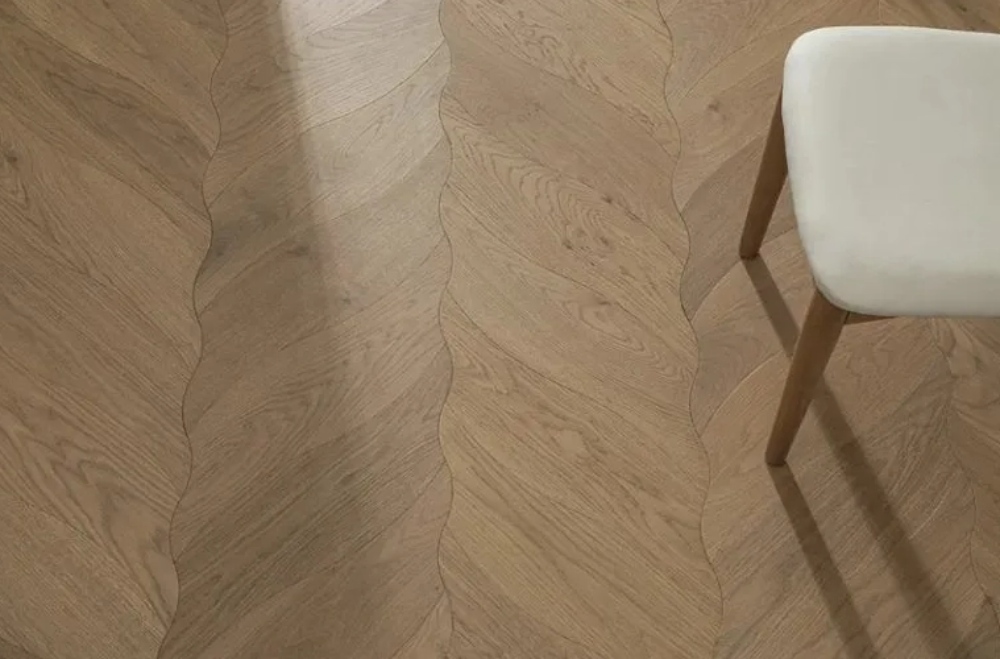
When Should You Replace Parquet Flooring Instead of Restoring It?
Ask when to replace parquet flooring instead of restoring it if the floor keeps lifting, has large color differences, has failed coating across the room, or no longer fits the new design. Replacement can be more practical than repeating local repair many times.
| Floor Condition | Repair First | Replace More Safely |
|---|---|---|
| Dull but flat surface | Sí. Sí. | Not needed first |
| Light scratches | Sí. Sí. | Not the first step |
| Large deep scratches | Test first | Safer if the surface is too thin |
| Several loose blocks | Risky | Safer if movement returns |
| Patchy after repair test | May still look uneven | Better for a clean finish |
| Old pattern does not fit the new design | Repair will not solve the style issue | New parquet selection is more direct |
LZY02 for Softer Decorative Renovation Styles
If the project needs a decorative floor but not a very formal look, LZY02 is worth checking after repair has been ruled out. Its leaf-inspired pattern gives the floor movement without making the room feel heavy.
For buyers comparing repair and replacement, LZY02 is useful when the old floor has lost pattern clarity and the space needs a fresh Unique artistic parquet floor direction.
LZY23 for Richer Pattern and Warmer Tone
LZY23 suits projects that need a warmer and more detailed parquet look. Its product page lists a walnut lotus pattern, UV Coating, Eucalyptus Plywood core, and T&G system.
If the old parquet looks patchy after repair testing, LZY23 gives buyers a more controlled way to keep a decorative pattern without depending on uneven restoration results.
LZP1002 for a Classic Versailles Layout
For a more classic layout, LZP1002 is a Versailles-style parquet option. It suits villas, apartments, reception rooms, and formal interiors where symmetry is part of the design.
Compared with repairing many damaged blocks one by one, a planned replacement with LZP1002 makes the full room easier to control. For buyers looking at Multi-Layer Engineered Wood Flooring with a traditional parquet look, it is a clearer route.
How Should Buyers Plan the Next Step?
If the floor is dull or lightly scratched, start with cleaning, polishing, and a small recoating test. If the floor has loose blocks, deep damage, or uneven color, check repair risk before sanding. If the old parquet cannot give a clean finish, replacement is usually the better direction.
To restore parquet flooring well, do not rush. Check the floor, test a small area, then decide based on surface condition, pattern value, repair risk, and project requirements.
If you are comparing restoration with replacement, prepare damaged-area photos, room size, pattern preference, finish requirement, and project quantity. YEHUI can use these details to help compare whether LZY02, LZY23, or LZP1002 fits the renovation direction better. For sample details, product matching, or project communication, send the basic floor information through contacto.
Preguntas frecuentes
Q: Can I Restore Parquet Flooring Without Sanding?
A: Yes, if the problem is dirt, dull coating, light scratches, or old residue. Cleaning, polishing, or recoating may be enough. If the floor has loose blocks, deep scratches, or failed coating, sanding or local repair may be needed.
Q: How Do I Know If My Parquet Floor Should Be Replaced?
A: Replacement is worth considering when the floor keeps lifting, has wide color differences, looks patchy after a repair test, or cannot be safely refinished. At that point, new parquet flooring may give a cleaner result.
Q: Which YEHUI Product Fits a Parquet Renovation Project?
A: LZY02 fits natural decorative interiors, LZY23 suits warmer walnut-pattern spaces, and LZP1002 works for a classic Versailles-style look. If your goal is to restore parquet flooring visually but the old floor is too damaged, these products can keep the parquet character with a more controlled finish.


 Spanish
  English
  Arabic
  French
  German