

Review commercial flooring orders from the quotation stage onwards to ensure products have been ordered correctly by name, model number and pattern terminology before they go into production. It is not uncommon for different individuals within a company to use same pattern name for completely different designs and minor misPrinted wording can cause massive problems upon delivery.
A short structured brief is better than another long list of quotes. The brief should cover the basic product information, visual approval, document pack and packing notes. The purchasing and repeat-order teams then have a constant reference point, whereas site suitability is the responsibility of the project team.
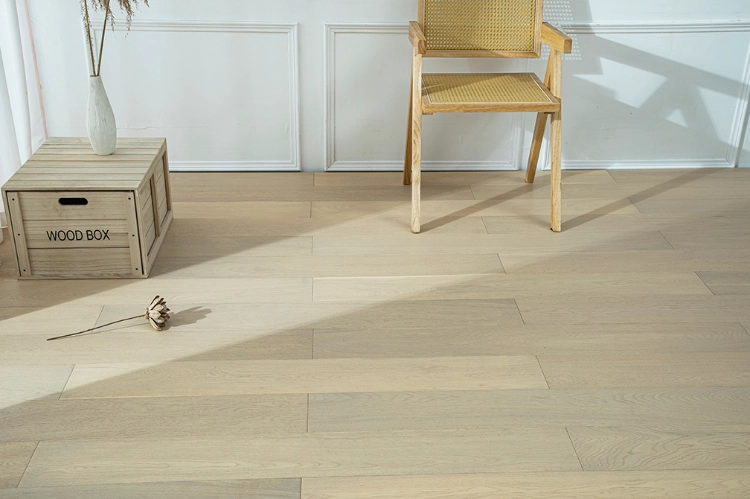
A clear product specification
The product object should be clearly defined
The product name on the quotation should clearly identify what is being purchased. It may refer to an engineered wood flooring plank, a parquet format, or a Chevron wood flooring layout. “Suelo de madera de ingeniería” can describe more than one construction. The selected product should be recorded in one line, with the quotation page retained as the reference.
The pattern should also have a plain description: straight plank, herringbone layout, Chevron wood flooring layout, or another parquet arrangement. “Parquet” describes the arrangement, not the board. This distinction can become important when a tender moves from design to purchasing and then to logistics, because each team may use its own shorthand.
Dimensions and thickness should be recorded
The order file should state length x width x total thickness. Any project tolerance should be recorded, along with the agreed packing requirements. A catalogue photograph cannot replace these figures. The same dimensions should appear on the pro forma invoice, packing list, and sample approval record so that later handoffs do not depend on memory.
YEHUI states that custom sizes are available and that different thickness options can be selected for different applications. These options should be treated as inputs to the final specification rather than as a final choice. The target size, acceptable range, and requested construction should be recorded in the order. If the project calls for a deeper wear layer, a 3mm or 4mm custom option can be requested for confirmation before production. The written confirmation provides the factory with the production reference.
Product requirements and site decisions should remain separate
The product file and the site file should remain separate. Dimensions, surface treatment, pattern, and packing belong in the product file. Room layouts, subfloor preparation, sequencing, and local site work belong with the project team. This separation reduces the risk that a general product description will be interpreted as a promise about a particular site.
Visual approval should be completed before the purchase order
Surface treatment should be named consistently
Finish terminology should be consistent. YEHUI lists matte, glossy, hand-scraped, and brushed surface treatments. The term used in the order should match the term on the sample label. If the designer uses “low sheen” while the quotation says “matte,” both terms should be recorded and their intended equivalence confirmed. The next person reviewing the file should not have to interpret whether the terms match.
The sample should be checked under the light used for the project presentation. The sample code, finish name, and approval date should be retained. “The darker one is fine” is not a reliable approval record; “matte finish, sample B approved” is. YEHUI also describes a wide range of colours and finishes, so the team should narrow the selection before the order is released.
Patterns should be treated as measured layouts
Herringbone, Chevron wood flooring, and other parquet layouts need a drawing as well as a name. The module, direction, any border treatment, and the drawing reference should be included. For a Chevron wood flooring project, the angle or module specified by the designer should be recorded. Two drawings can both say “chevron” and still produce different visual rhythms.
YEHUI describes its parquet offer as a Unique artistic suelo de parquet. That term can be used as a design description after the product and pattern have been selected, rather than as a substitute for the specification.
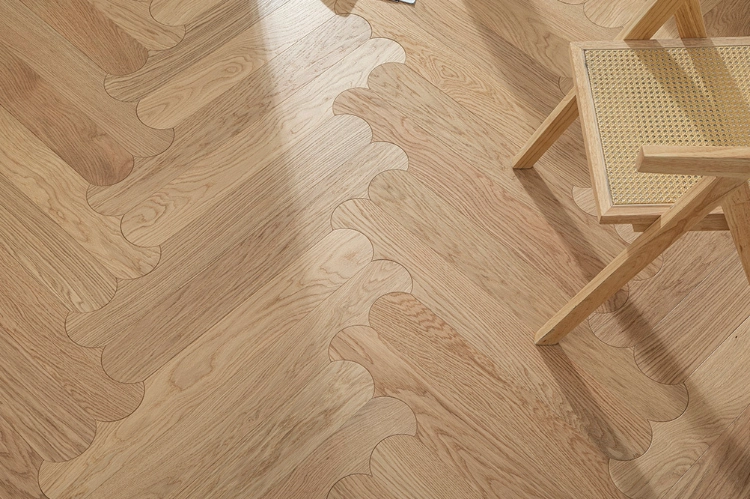
A sample approval record should be built
A sample approval record should include five core fields: product model, dimensions, surface treatment, pattern, and approval status. The project code and approver should also be added. A retained sample, or a photograph showing a ruler and finish label, provides a clear reference. If other finishes were considered, the rejected options should be recorded so that an outdated sample does not return to a quotation after the design changes.
The project document pack should be assembled
Documents required with the order should be listed
A document list should be agreed prior to issuance of the purchase order. This may include the offeror’s quotation, approved product specification and sample records, reference to approved drawings, information relating to packing and carton codes and contact for shipping. If a tender requires a test document then title and product scope must be advised. “All certificates” is not a specification that can be checked on a consistent basis.
En National Wood Flooring Association has created professional resources to help your team speak flooring with consistency. However, these resources will not replace the supplier’s product file and the manufacturer will still need to identify the model ordered and link to the corresponding document.
OEM language should be used precisely
The term “OEM” can refer to many different private-label requirements when discussing sales in a conversation. At YEHUI, OEM stands for a business model, where manufacturers design and produce products for their clients with specific requirements. The changes that are required to produce the products for the client must be clearly stated. For example, size, finish, pattern, labels, carton artwork, etc. in the field that has been agreed upon by the two parties. For further information, regarding YEHUI OEM and ODM page.
“Custom” should not be the complete production instruction. The approval stage and the record confirming the change should be named. Purchasing, design, and logistics can then work from the same request instead of carrying different interpretations.
Standards references should be checked without over-reading them
Record the standard number and issuing body, the test method, and product scope cited by the quotation in your review notes. The ASTM standards site provides background information on how the various standards were developed and how they are cited. A report of a floor does not in itself confirm that the floor in question meets certain requirements. The full report must state model name, actual construction, test date, testing laboratory, etc. Also limitations of the report must be stated.
The order should close with a practical handoff
Packing is part of the order specification. Carton labels, pallet marks, quantity per carton, protection for corners and surfaces, and documents needed before dispatch should be recorded. Mixed models or finishes should have a defined separation method. A warehouse or project coordinator should be able to identify each item without opening the original sales thread.
A short release checklist:
| Check | Written record |
| Product identity | Model, construction, and product page |
| Dimensiones | Length, width, thickness, tolerance, and custom size request |
| Visual approval | Surface treatment, colour or finish name, pattern, and sample code |
| Project documents | Specification, drawing reference, required test documents, and approval owner |
| OEM details | Exact private-label or packaging changes and approval stage |
| Packing | Carton marks, quantities, separation of models, and dispatch documents |
Questions to resolve before ordering
Can a supplier quote a custom size without a final drawing?
It’s useful to issue a preliminary quotation before the final drawing is completed, clearly marking this as subject to the final approved dimensions and tolerance, and then closing off the production specification prior to releasing the order.
Should a commercial project choose a pattern first or a finish first?
Review pattern and finish together. Pattern changes the visual scale of the pattern and finish changes how the surface looks under project lighting. Verify that approved sample shows both options.
What should a buyer do when a certificate is mentioned in a sales message?
Buyer should ask for Document Title, Issuer, Report Number, Product Scope and Validity etc and put review in compliance file. General statement is not proof for individual shipment.
How can a distributor keep repeat orders consistent?
Store the approved sample description, model, dimensions, finish and packing note as a single controlled specification against which to compare the current quotation before reusing it.
By recording the same written specification for a B2B flooring order from the time that it is written as a quotation through to the time of delivery, all relevant information such as size, surface finish, pattern, additional documents and packing details can be stored in one place. When comparing quotations, written specifications can be used to request direct confirmation from suppliers as to their ability to meet the requirements of the order. YEHUI can provide quotations based on the target size, selected finish, pattern and required project documents..



 Spanish
 English
 Arabic
 French
 German