

Artistic parquet flooring is suited to controlled indoor projects where the floor serves as a visible design feature. It is less appropriate where regular moisture exposure, demanding traffic, strict material-efficiency targets, or an unprepared substrate creates unnecessary risk. Buyers should assess the room layout, operating conditions, budget, installation capability, and procurement controls before confirming the specification.
YEHUI supplies multi-layer engineered wood flooring and distinctive parquet designs for commercial projects. Its flooring uses real-wood veneer over multi-layer plywood, with project-specific patterns, finishes, and customer-requested colors subject to technical review and sample approval.
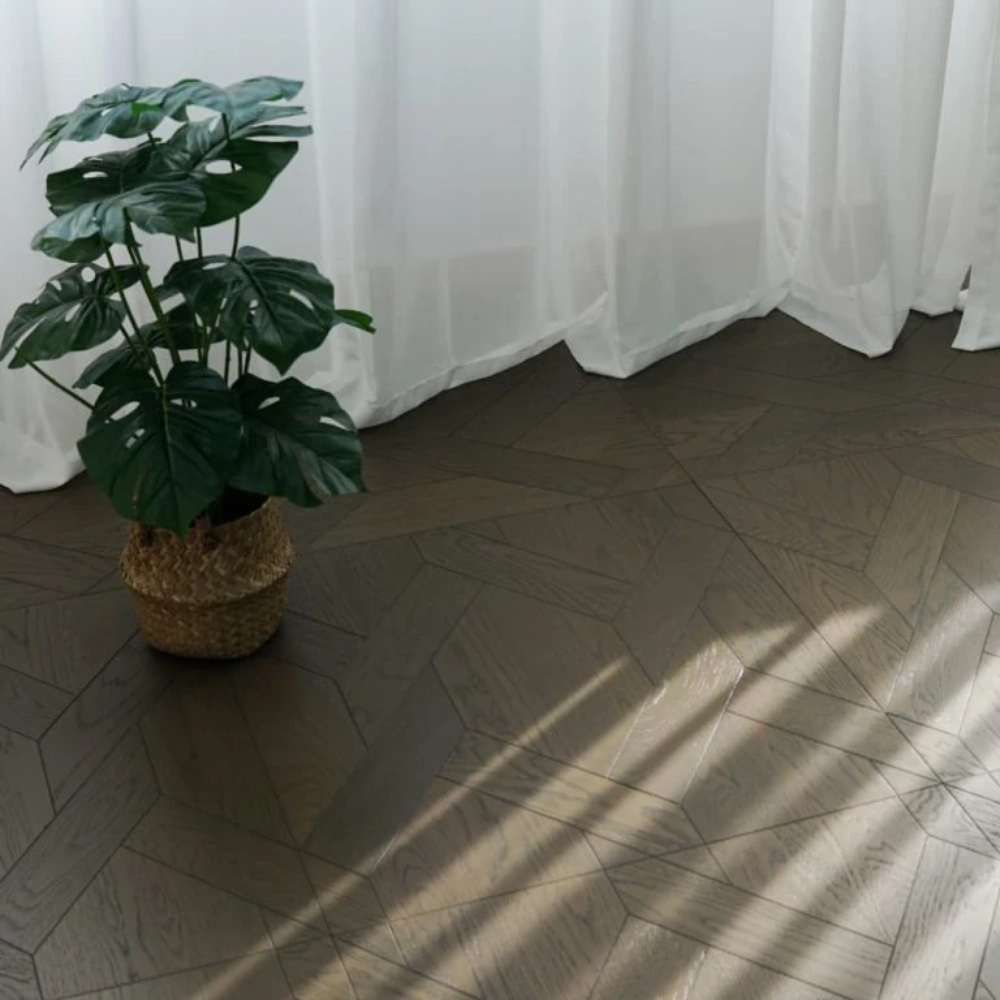
Which Project Conditions Make Artistic Parquet a Suitable Choice?
Prioritize Projects Where the Floor Is a Visible Design Feature
Suitable applications include controlled luxury hospitality areas, reception spaces, brand stores, furniture showrooms, presentation rooms, and selected private residential projects. In these settings, artistic parquet flooring can contribute directly to the interior identity rather than act as a neutral surface.
Design teams should establish this role early. If fixed displays, furniture, counters, or circulation equipment will conceal most of the floor, the additional pattern complexity may offer limited commercial value.
Match Pattern Complexity to the Design Brief and Room Layout
Review room dimensions, entrances, sightlines, columns, borders, transitions, and fixed furniture before approving a pattern. Large, uninterrupted areas generally display complex compositions more clearly. Irregular spaces may fragment the design or require careful setting-out.
Customer-requested patterns and colors require technical review. A pre-production sample should confirm proportions, veneer combinations, surface texture, gloss, and appearance under the project’s lighting conditions.
Confirm That the Operating Environment Is Appropriate
Specify artistic parquet flooring only for controlled indoor conditions where regular water exposure and unusually demanding traffic are not central requirements. It is not recommended for bathrooms, kitchens, or heavy-footfall locations.
Set written environmental and performance requirements for the selected construction. General descriptions such as moisture-resistant or wear-resistant should not replace project-specific limits and acceptance criteria.
When Should Buyers Specify a Simpler Engineered Wood Format Instead?
Avoid Artistic Parquet When Moisture or Traffic Risks Dominate
Appearance should not override site conditions. Where flooring may face regular water exposure or traffic beyond approved limits, choose a floor category designed and documented for that environment.
Procurement teams should define measurable requirements for moisture, temperature, traffic, maintenance, and site preparation. If these requirements conflict with the proposed application, artistic parquet flooring should be removed from the specification.
Reconsider It When Budget and Material Efficiency Are Priorities
Artistic parquet normally costs more than standard geometric flooring because pattern production is more complex and can create greater material waste. Installation complexity should not automatically be presented as the main reason for the price difference.
For extensive areas with tighter budgets, herringbone or Chevron engineered wood flooring may be more practical. Herringbone creates a Z-shaped arrangement, while Chevron wood flooring forms a V-shaped fishbone pattern.
Do Not Proceed Until the Substrate and Installer Are Verified
Before ordering, confirm substrate flatness, dryness, stability, and compatibility. The contractor and installer must understand pattern setting-out, tongue-and-groove installation, transitions, perimeter details, and post-installation protection.
YEHUI supplies flooring but does not provide installation services. Responsibilities for measurement, substrate preparation, installation, inspection, and defect reporting must therefore be assigned in writing before production.
Which YEHUI Flooring Options Fit Different Design Priorities?
Use Chinese Knot Parquet for a Symbolic, Antique-Inspired Feature
Parquetböden -Chinesischer Knoten | features a pattern inspired by traditional Chinese aesthetics. It combines a deep-brushed, oil-finished antique character with an ultra-matte, low-reflection appearance.
Material choices include birch or eucalyptus with natural oak or teak veneer. Color directions include smoked oak, classic walnut, and golden brown. For luxury hospitality or private-home specifications, approve the pattern, finish, construction, and operating conditions through sampling. Fire resistance certification is available on request for relevant public projects.
Consider Qiuyu for Customizable Decorative Statements
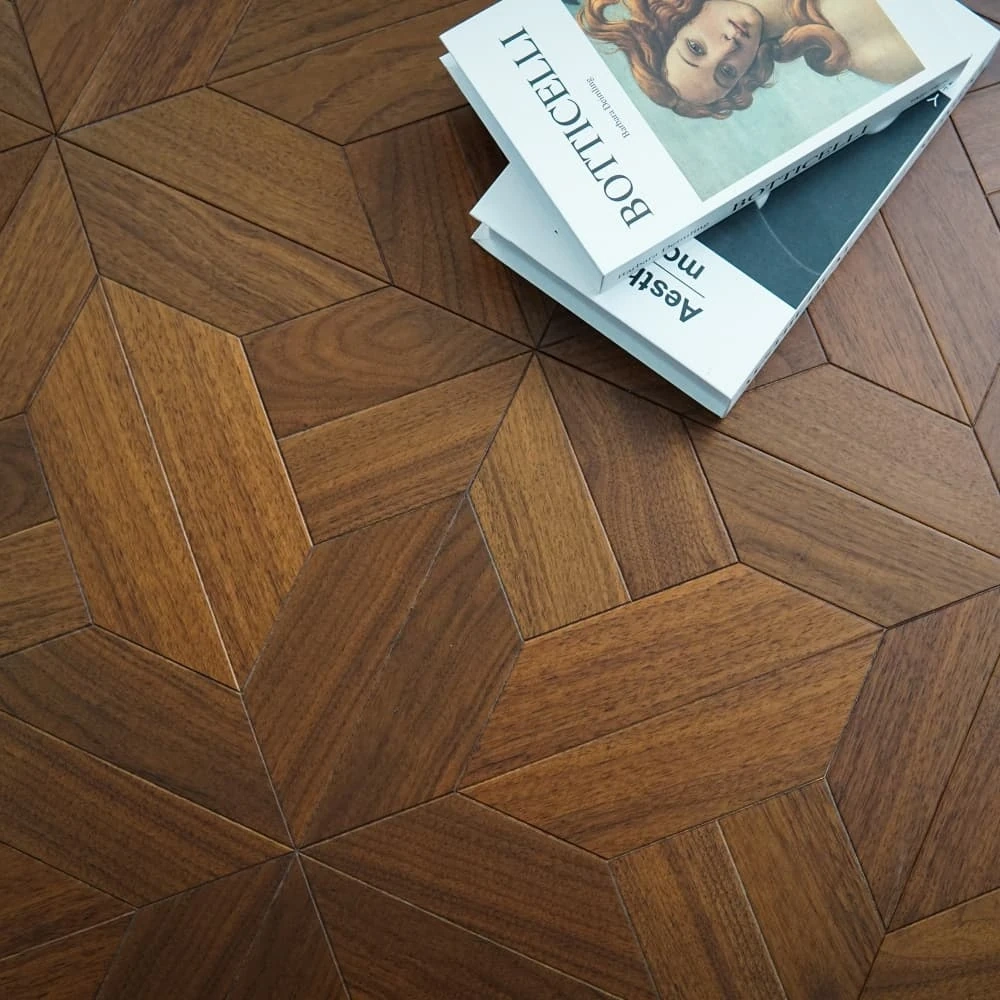
Parquet Flooring -Qiuyu | YEHUI #2 supports design-led hotels, brand stores, showrooms, and other presentation-focused interiors. It uses walnut or oak top layers, with walnut inlays on an oak base or CNC laser engraving among the available options.
Panel formats include 600 × 600 mm, 580 × 580 mm, and other project-reviewed dimensions. Anti-scratch UV lacquer is applied during production, while natural oil and wire-brushed treatments are available upon request. Custom shapes, angles, packaging, and brand elements require sample approval and written order confirmation.
Select Herringbone When a More Repeatable Geometry Is Preferred
Fischgrätparkett | Eiche Natur | R1106 is Model R1106, a multi-layer engineered wood flooring option with oak veneer, eucalyptus base material, and a natural oak smooth surface.
It provides geometric character with less visual complexity than artistic parquet flooring. Final dimensions, tongue-and-groove installation specifications, substrate requirements, and site methods should be recorded in approved technical documents.
What Must Procurement Teams Verify Before Placing an Order?
Approve Samples, Patterns, and Appearance Before Production
Request a pre-production sample covering the pattern, wood selection, customer-requested color, texture, gloss, and finish. Review it under actual or representative project lighting and alongside adjoining materials.
Natural veneer varies in grain and tone. Define how this variation will be assessed across production batches, and retain the signed sample as the manufacturing and pre-shipment inspection reference. YEHUI’s OEM/ODM service can support tailored development and sample approval.
Obtain Technical and Quality-Control Documentation
Confirm that the selected product uses real-wood veneer over multi-layer plywood. Written specifications should cover dimensions, construction, veneer, surface treatment, dimensional consistency, and tongue-and-groove quality.
Use measurable inspection criteria rather than broad performance descriptions. If certification is required, confirm the exact document, applicable product, issuing basis, and approval responsibility before placing the order.
Define Commercial, Delivery, and Responsibility Boundaries
Record MOQ, production schedule, packaging, pallet requirements, shipping documents, and delivery timing in the purchase agreement. Chinese Knot offers a flexible MOQ and custom pallet service suitable for forklift handling. Pallet construction and export-packaging requirements should still be confirmed in writing. Qiuyu custom orders are available from a 20ft-container quantity, with logo and carton customization.
Assign responsibility for site measurement, substrate preparation, installation, post-installation protection, replacement materials, defect reporting, and after-sales handling. Clear boundaries reduce disputes among the buyer, flooring supplier, contractor, and installer.
For project-specific pattern assessment, samples, construction details, and commercial terms, discuss your flooring requirements with YEHUI using drawings, quantities, intended applications, and finish preferences. This review helps determine whether artistic parquet flooring, herringbone, or Chevron engineered wood flooring is the appropriate sourcing direction.
FAQ
Is Artistic Parquet Flooring Appropriate for Every Commercial Interior?
No. It is best suited to visually prominent, controlled indoor spaces. Artistic parquet flooring is not recommended for bathrooms, kitchens, or heavy-footfall locations. Projects with unresolved moisture conditions or substrate risks should not proceed until those conditions are documented and the flooring specification is confirmed.
Why Does Artistic Parquet Usually Cost More Than Standard Herringbone?
It involves more complex pattern production and generally creates greater material waste. Herringbone uses a more repeatable geometry, making it a practical alternative for larger areas or projects with tighter material-efficiency targets.
What Should Buyers Approve Before Artistic Parquet Enters Production?
Buyers should approve the pattern, veneer selection, customer-requested color, surface texture, gloss, finish, dimensions, construction, packaging, and visual sample. Quality criteria, installation responsibilities, production timing, and delivery terms should also be confirmed in writing.


 German
  English
  Spanish
  Arabic
  French