

You can read an engineered wood flooring quotation quickly by checking three points first: specification completeness, comparable price scope, and clearly assigned commercial responsibilities. Do not begin with the unit price. A low figure may exclude customization, packaging, freight, samples, or documentation.
YEHUI supplies multi-layer engineered wood flooring and artistic parquet flooring for commercial sourcing. This review method helps procurement teams, distributors, contractors, importers, and project designers screen offers before detailed negotiation.
What Should Buyers Confirm Before Comparing Quotations?
A reliable comparison begins with an internal flooring schedule that gives every bidder the same technical requirements, quantity basis, and delivery scope.
Translate Project Requirements Into a Quotation Checklist
Specify whether the project requires standard engineered planks, Chevron wood flooring, herringbone, or artistic parquet. Record the pattern, dimensions, total thickness, real-wood veneer requirements, multi-layer plywood core, finish, grade, profile, quantity, and destination.
Separate mandatory specifications from visual preferences and optional customization. Otherwise, one supplier may quote a standard finish while another includes custom development, making the engineered wood flooring quotation comparison misleading.
Check Whether Every Essential Line Item Is Present
Each quotation should identify the product, unit of measurement, quantity, unit price, total price, currency, and trade term. Included and excluded costs should be separated.
Review charges for sampling, custom development, packaging, freight, insurance, taxes, documentation, testing, and labeling. Require written assumptions, optional charges, buyer responsibilities, and quotation validity rather than leaving them open to interpretation.
Separate Standard Supply From Customer-Requested Customization
Mark every requested color, dimension, pattern, label, finish, or packaging format that differs from standard supply. Confirm whether development samples, approval samples, and bulk production involve separate charges.
Private labeling is available for All Birch Plywood Core wood Flooring \| QH1925\| YEHUI, but the labeling specification and price require written confirmation. Preliminary discussions are not an approved production specification.
Which Product Specifications Make Quotations Comparable?
Product descriptions must be technically equivalent before prices can be compared. Similar colors or general descriptions such as “oak flooring” do not prove that two offers cover the same construction.
Verify Construction, Dimensions, And Material Descriptions
The quotation should specify real-wood veneer over a multi-layer plywood core. Compare length, width, total thickness, veneer requirement, grade, core option, and permitted dimensional variation line by line.
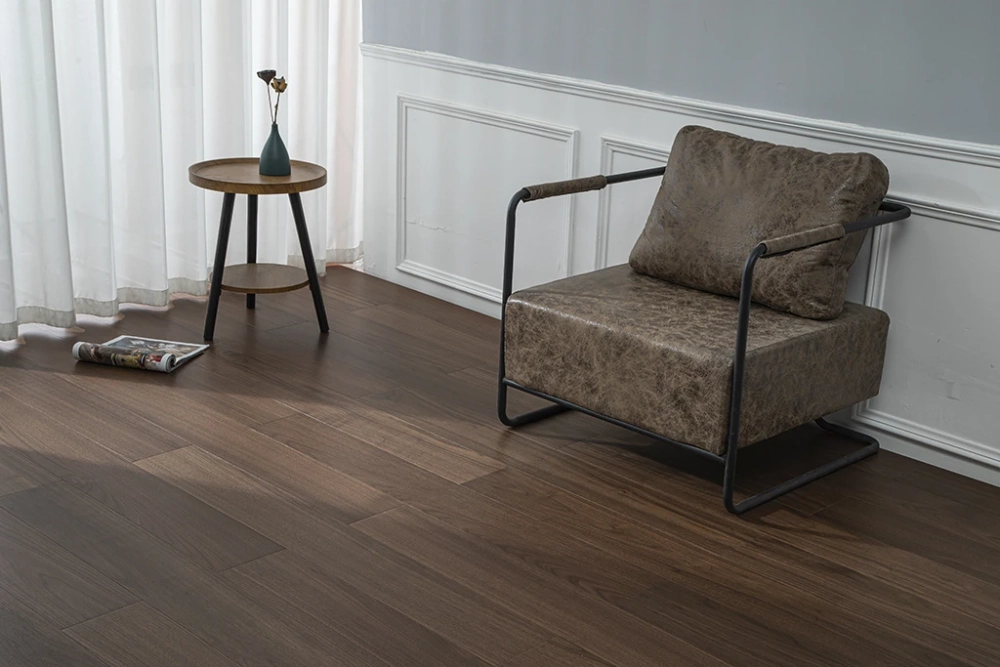
QH1925 lists 1210X165X15mm, a 15–18 mm total thickness range, and multi-layer eucalyptus plywood, all-birch, or other core options. The final dimensions, total thickness, and core material must appear in the quotation and order documents before approval.
Match Patterns With The Correct Profile And Pricing Basis
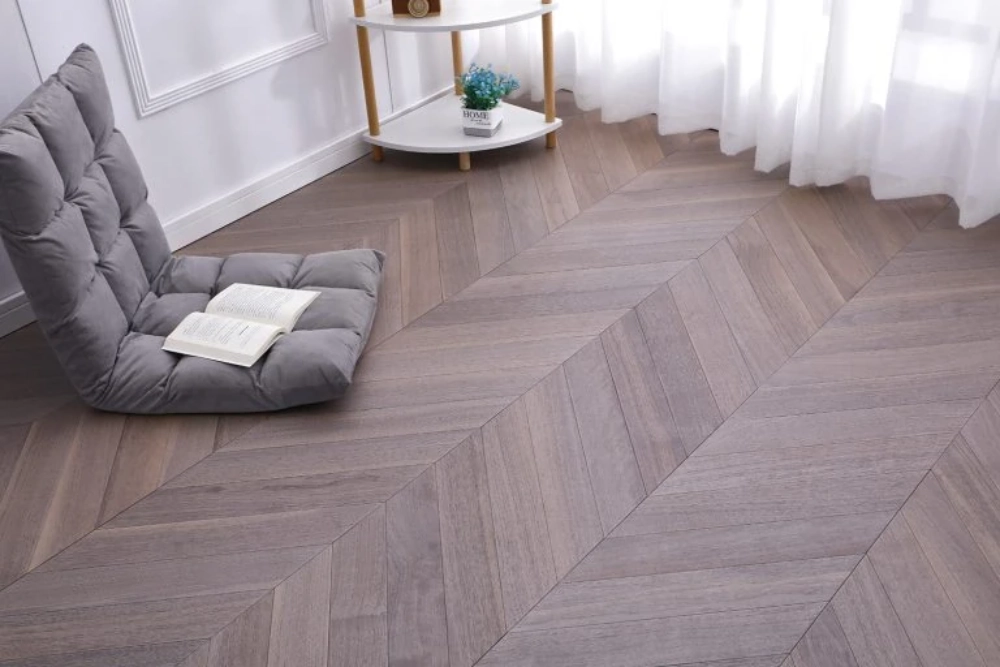
Patterned products need additional detail because component sizes and quantity calculations vary. Chevron Flooring \| Multilayer JY8103 \| YEHUI is a V-shaped Chevron format with a 92 mm width, 510 mm length, and 15 mm thickness. State the joining profile and approved layout in the quotation. For herringbone and artistic parquet, confirm the required T&G profile in the order documents.
Parquet Flooring-Tang Yun \| YEHUI provides a more distinctive design using diamond, rhombus, and interlaced-grid geometry. Size references include 400 × 400, 500 × 500, and 600 × 600 mm, with 12, 14, or 15 mm thickness options. Confirm any special cuts, inlays, and borders separately.
Artistic parquet normally costs more than standard herringbone because it creates greater manufacturing complexity and material waste, not because installation is inherently more complex.
Clarify Finish, Color, Grade, And Approval Standards
Distinguish brushed, hand-scraped, smoked, UV-coated, natural-oil, and lacquered finishes where applicable to the selected item. UV coating is completed during production, not applied after installation.
Connect any requested color to an approved physical or documented sample. The quotation should define grading language, acceptable natural variation, approval status, and the process for assessing differences between samples and bulk output.
How Should Buyers Identify Hidden Costs And Commercial Risks?
Commercial risk often appears in exclusions, quantity calculations, delivery assumptions, and unclear responsibility boundaries rather than in the headline price.
Compare Quantity, Unit Price, And Price Scope Together
Check whether the offer is priced per square meter, package, set, or another unit. Compare ordered, packaged, and billable quantities, including any agreed project allowance or quantity tolerance.
Separate the flooring price from pattern development, borders, special cuts, labeling, upgraded packaging, samples, tests, and documents. A lower unit price can produce a higher landed cost if its scope is narrower.
Review Packaging, Logistics, And Delivery Assumptions
Confirm the packaging scope, Incoterm, named port or destination, loading basis, freight responsibility, insurance responsibility, and shipping documents. Packaging should correspond to the board dimensions, patterned components, and export route.
The quotation must define when lead time begins. The applicable milestone may be deposit receipt, sample approval, technical confirmation, or packaging approval. Also establish how buyer revisions, custom development, or shipping delays affect the schedule.
Read Payment, Warranty, And After-Sales Terms Carefully
Review the deposit, balance-payment trigger, accepted payment method, bank charges, and treatment of specification changes. Warranty terms should apply to the exact model and finish purchased, not merely to a broad product category.
Define inspection timing, claim evidence, response responsibilities, and available remedies before payment approval. YEHUI supplies flooring products but does not provide installation service, so the contract must assign installation and site responsibilities separately.
How Can Buyers Verify A Quotation Before Supplier Selection?
Final verification converts differently formatted offers into a controlled procurement comparison and reveals gaps that could become cost or quality disputes.
Build A Side-By-Side Comparison Matrix
Use the same fields for every bidder:
| Comparison Area | Details to Normalize |
| Produkt | Type, construction, dimensions, veneer, core, grade and profile |
| Appearance | Pattern, finish, requested color and approved sample |
| Commercial scope | Quantity, unit, currency, optional costs and exclusions |
| Lieferung | Packaging, Incoterm, destination and responsibility |
| Risk control | Lead time, payment, warranty and quotation validity |
Mark every blank or non-equivalent field before comparing totals. Convert currencies, measurement units, and delivery scopes to a common basis.
Link Samples And Quality Control To The Quotation
Identify approved samples, drawings, finish references, pattern layouts, and packaging requirements in the quotation or attachments. Specify which features need pre-production approval and which will be inspected during or after production.
Record agreed measurable acceptance criteria directly. Do not rely on verbal expectations for color variation, dimensions, grading, or surface appearance. YEHUI offers OEM/ODM support, but every custom requirement needs a traceable approval reference.
Apply A Final Procurement Risk Check
Flag vague construction, missing T&G information, inconsistent dimensions, unspecified finishes, unclear exclusions, and customization without separate pricing. Confirm the issue date, version, validity period, attachments, and responsible commercial representative.
Selection should align specifications, approvals, landed-cost scope, and responsibilities rather than favoring the lowest headline price alone.
For project-specific clarification, share your procurement requirements with YEHUI, including the flooring schedule, pattern, dimensions, finish reference, quantity, packaging needs, and destination. This creates a clear basis for reviewing product scope and commercial terms before order approval.
FAQ
What Information Should Every Engineered Wood Flooring Quotation Include?
An engineered wood flooring quotation should include product construction, dimensions, veneer requirement, plywood core, finish, grade, profile, quantity, unit price, currency, total price, packaging, delivery term, payment terms, warranty, validity period, exclusions, and customization charges.
How Can Buyers Compare Quotations With Different Price Terms?
Convert every offer to the same currency, unit of measurement, quantity basis, Incoterm, and destination. Add excluded freight, packaging, samples, custom work, documentation, and other optional charges before comparing landed commercial value.
Which Details Should Be Confirmed Before Approving A Custom Flooring Order?
Confirm the final dimensions, pattern, T&G profile, finish, requested color reference, grade, approved sample, packaging, labeling, price, production milestone, delivery scope, and warranty. Every approved drawing, sample, or revision should be identifiable in the order documents.


 German
  English
  Spanish
  Arabic
  French