

Herringbone Wood Floors usually cost more than comparable straight-laid Engineer wood flooring. The pattern requires tighter dimensional control, clearer T&G profile and board-orientation control, more layout planning, and more perimeter cutting. The added cost can still make sense when the floor supports the room design and the specification reduces correction, color, and joint risks.
YEHUI supplies Multi-Layer Engineered Wood Flooring, herringbone flooring, Chevron wood flooring, and Unique artistic parquet floor products for overseas projects. Its production process covers material selection, drying, moisture control, cutting, sanding, sizing, surface treatment, and finished-product inspection. Machine and manual checks are used to review dimensions, thickness, moisture condition, and surface consistency. These controls matter because a small difference between boards becomes visible once a pattern repeats across a full room.
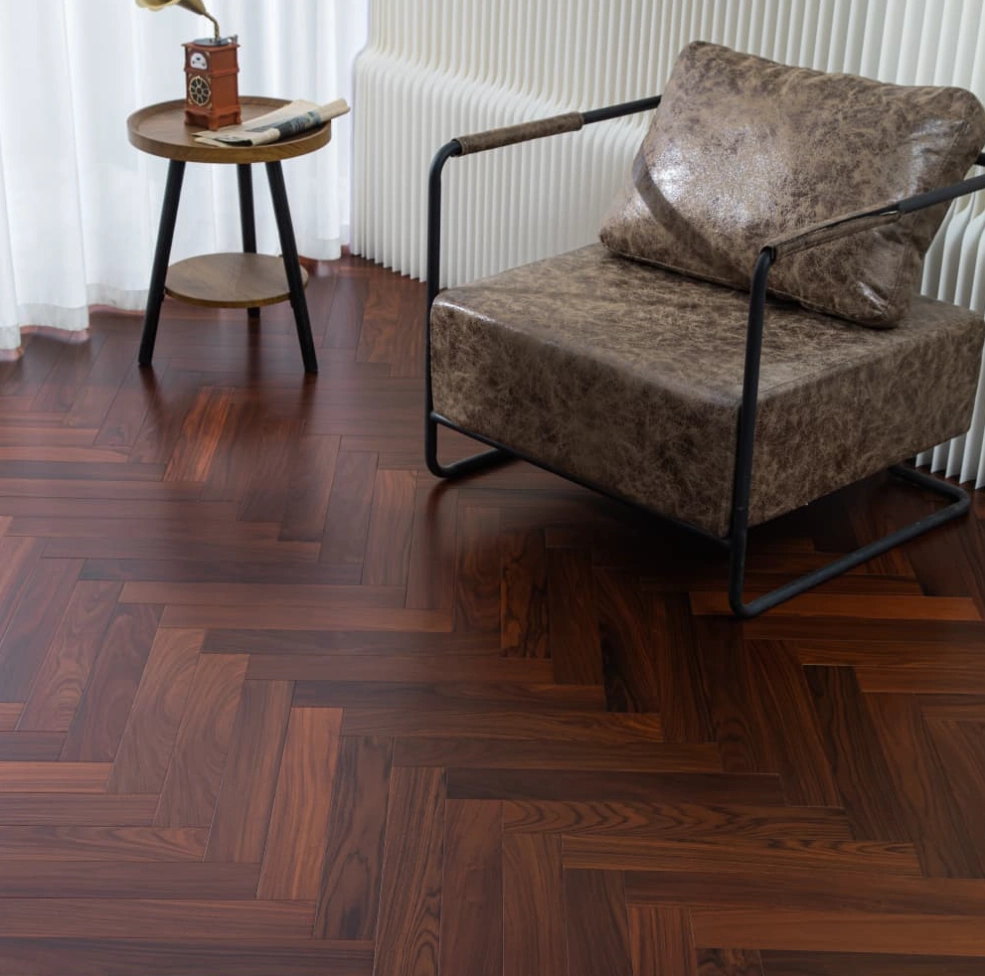
Why Do Herringbone Wood Floors Cost More Than Standard Flooring?
A useful comparison must use products with similar surface material, structure, finish, and order conditions. Otherwise, the price difference may come from the product construction rather than the pattern itself.
Precision Cutting and Pattern Alignment Increase Production Work
The answer to why is herringbone flooring more expensive starts with board geometry. Straight planks follow one direction, while herringbone layouts use rectangular planks arranged at right angles. Length, width, T&G profile, and end alignment must therefore remain consistent across the entire production batch. A small dimensional difference can gradually shift the pattern, create uneven joints, or leave the final row out of line. If the approved T&G profile requires A/B boards, buyers should confirm the packing ratio before production.
Nominal specifications also need to match the actual boards. YEHUI’s current engineered flooring range includes project configurations around 14–15 mm in total thickness, while its Natural Oak Herringbone Flooring R1106 is specified at 450 × 75 × 15 mm. For projects that require a thicker oak veneer, 3 mm, 4 mm, or 6 mm options can be discussed, subject to the approved product specification. Buyers should measure the finished samples with calipers rather than rely only on the quotation, because even a small difference between the stated and actual surface layer affects future sanding options and the commercial value of the order.
Moisture content should be confirmed in the approved technical specification according to the destination climate. It should not be treated as one universal number for every market. The purchase order should state the agreed range, testing method, sampling quantity, and acceptable deviation so that moisture control can be checked before shipment.
Layout, Material Allowance, and Third-Party Installation Affect Total Project Cost
Herringbone vs straight flooring cost includes more than the unit price. The starting line, doorways, borders, perimeter cuts, and room shape affect material planning and the labor quoted by a local flooring contractor. This third-party installation cost is separate from YEHUI’s flooring supply. Herringbone flooring material waste also changes when a room contains angled walls, columns, or several transitions.
| Cost Factor | Fischgrätenmuster | Straight Layout | Buyer Check |
| Alignment | Repeated two-direction pattern | One main direction | Check board consistency |
| Planning | Center line matters | Usually simpler | Review room drawings |
| Edge Work | More repeated cuts | Fewer pattern cuts | Set a project allowance |
| Error Visibility | Small errors repeat | Easier to absorb | Approve a joined sample |
There is no responsible fixed answer to how much extra flooring for herringbone pattern without a room plan. The allowance should reflect board size, borders, transitions, pattern direction, and spare material needs.
Subfloor and Joint Design Affect Installation Risk
A repeated pattern shows substrate unevenness faster than a straight layout. The project document should state flatness, moisture condition, adhesive method, T&G tongue-and-groove profile, and expansion treatment. Wood-based flooring also moves with temperature and humidity. The T&G joint must hold the pattern while allowing normal movement, so buyers should request written guidance for the selected construction.
Does the Higher Cost Deliver Better Long-Term Value?
Initial price is only one part of the decision. For herringbone wood floors, value depends on structure, finish, visual role, and the risk of later correction or replacement.
Engineered Structure Supports Dimensional Stability
Multi-Layer Engineered Wood Flooring uses layers arranged in different directions to distribute internal stress. It does not stop normal material movement, but it supports more stable performance than a one-direction structure. The engineered herringbone flooring price should therefore be reviewed together with core construction, surface layer specification, moisture control, edge accuracy, and floor-heating suitability.
Surface Finish Influences Wear and Maintenance
Surface treatment changes grain visibility, touch, and routine care. Brushing makes natural grain more pronounced, while a confirmed UV-cured finish can provide a controlled coating with useful hardness and adhesion. Color also affects maintenance appearance: grey, light natural, and deep tones show dust, scratches, and variation differently. Buyers should review joined samples under the project lighting rather than rely on one online image.
Design Value Depends on Project Positioning
Is herringbone flooring worth it? It is easier to justify where the floor is intended to shape the room, such as premium apartments, model rooms, hotel guest rooms, or private residential reception rooms. Straight boards remain practical where speed, a quiet background, and broad budget control matter more. YEHUI’s guide on what makes herringbone wood flooring more valuable than standard flooring provides further comparison.
Which YEHUI Herringbone Wood Floor Fits Your Project?
The appearance of herringbone wood floors changes with color, grain, brushing, lighting, and visible floor area. Start with the required room mood, then confirm structure, finish, sample range, and order details.
Light-Colored Serrated Pattern for Bright, Space-Conscious Interiors
Light-colored serrated pattern Herringbone flooring suits projects that need a clear pattern without a heavy tone. The light surface keeps the layout calm, while the serrated texture adds grain definition. It works with pale walls and simple furniture. Buyers should review several joined pieces because repeated color and grain matter more than the appearance of one board.
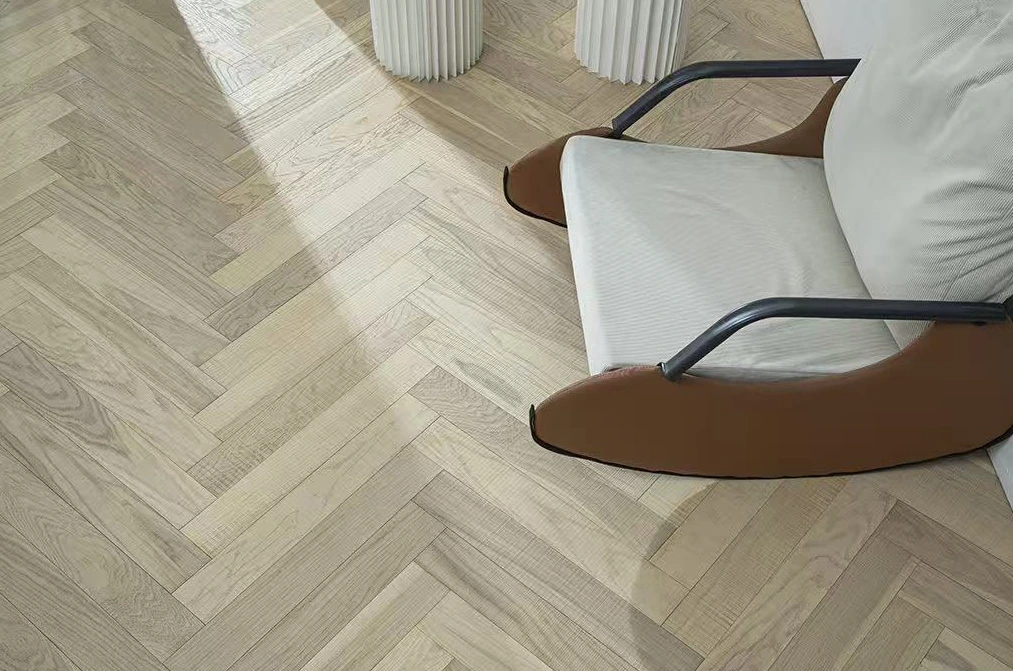
Grey Oak Herringbone for Modern Neutral Projects
Grey Oak Herringbone Bodenbelag fits modern apartments, home offices, private living spaces, and interiors based on grey, white, or black elements. Grey tones should be approved under the intended lighting because warm and cool light change their appearance. The approved sample should define an acceptable color and grain range rather than one identical reference board.
Oak Nature Herringbone for Warm, Timeless Spaces
Eiche Natur Herringbone Bodenbelag is suited to buyers who want a natural tone with less dependence on short color trends. It can support living rooms, hotel rooms, and serviced apartments where warmth matters more than a strong grey statement. A limit sample can show the lightest, darkest, calmest, and most active acceptable boards for production inspection.
How Can Buyers Control Cost Without Sacrificing Quality?
Cost control should remove unnecessary specifications and prevent ordering mistakes. Comparing incomplete quotations usually creates more risk than savings.
Compare Construction Before Comparing Unit Prices
Use the same technical fields for every supplier offer. At minimum, compare the surface species, veneer grade, total thickness, actual surface layer thickness, core structure, board dimensions, T&G profile and any required A/B board orientation, finish, moisture requirement, packaging, sample standard, and claim procedure.
For example, a buyer may be comparing a 14 mm or 15 mm Multi-Layer Engineered Wood Flooring structure, while veneer options such as 3 mm, 4 mm, or 6 mm may be customized for different project requirements. The total thickness and veneer thickness are separate specifications and should not be treated as interchangeable. A thicker top layer normally increases material use and may provide more scope for later surface renewal, while the total board thickness affects T&G joint design, transitions, packaging weight, and coordination with doors or adjacent flooring. The quotation should therefore show the total thickness and top layer separately, rather than combining them into one unclear figure.
The same rule applies to moisture content. Ask the supplier to state the controlled production range for the destination market and include it in the signed specification. During sample and pre-shipment inspection, use a calibrated moisture meter and record readings from multiple cartons rather than checking only one board. This turns the herringbone wood floors comparison into a measurable procurement decision instead of a visual price comparison.
Match Specifications to Use Conditions and Budget
A light room may gain more from the serrated option than from paying for a deeper color. Grey Oak should be selected after lighting and furniture finishes are fixed. Oak Nature is more flexible across warm and neutral schemes. The supplier also needs the destination climate, packaging requirement, quantity, and planned application because these details affect moisture planning, carton marking, and spare-stock decisions.
Approve Samples and Batch Standards Before Production
One board cannot show a repeated pattern. Buyers should approve a joined layout, color range, grain variation, surface texture, edge quality, any required A/B packing ratio, carton information, and inspection method. The approval record should also state whether spare boards must come from the same batch. This reduces later color-control problems.
What Should Buyers Confirm Before Placing an Order?
Before the purchase order is signed, technical and commercial details should be placed in one document. This gives both sides a clear inspection and claim reference.
Technical and Commercial Sign-Off
Confirm the product code, finish, dimensions, construction, pattern direction, T&G tongue-and-groove profile, substrate conditions, material allowance, sample range, packing method, lead time, inspection documents, spare quantity, and claim process. Drawings should also mark the starting direction and every transition where the visual line changes.
YEHUI Customization, Quality Control, and Delivery Support
YEHUI can review color direction, board specification, surface treatment, packaging, samples, and order requirements. Its workflow connects product discussion, design review, production checks, sample approval, and shipment preparation. The practical value is that approved details can be carried from the sample stage into production and inspection records.
Contact YEHUI for Samples and Project Advice
Send the room drawings, required area, target color, expected structure, destination, packaging needs, and schedule. Buyers can use the YEHUI Kontaktseite to request product documents, discuss sample ranges, and confirm which details should be fixed before bulk production.
FAQ
Q1: Are Herringbone Wood Floors always more expensive than straight flooring?
A: They usually require more cutting control, planning, and edge work. The final difference depends on structure, finish, room shape, quantity, and project requirements.
Q2: How much extra material should be ordered for a herringbone layout?
A: There is no single allowance for every room. The calculation should include board size, room shape, borders, doorways, pattern direction, and spare material.
Q3: Which herringbone color works across several interior schemes?
A: Oak Nature is flexible for warm and neutral interiors. Light-colored serrated pattern Herringbone flooring suits brighter rooms, while Grey Oak Herringbone flooring fits modern grey, white, and black schemes.


 German
  English
  Spanish
  Arabic
  French