

A discount engineered wood floor can reduce project cost, but it still needs careful checking. The real issue is not whether the price looks low. Buyers need to know why it is discounted, whether the structure is stable, whether the surface finish fits daily use, and whether the supplier can support sample review and order matching.
YEHUI focuses on Engineer wood flooring, Chevron wood flooring, and Unique artistic parquet floor designs. Through factory supply and product customization, YEHUI works with buyers who need factory direct engineered wood flooring, sample comparison, size discussion, and project-based product selection. For a discount engineered wood floor, the buying logic should be simple: pay less, but do not accept weak structure, unclear materials, poor surface treatment, or vague service terms.
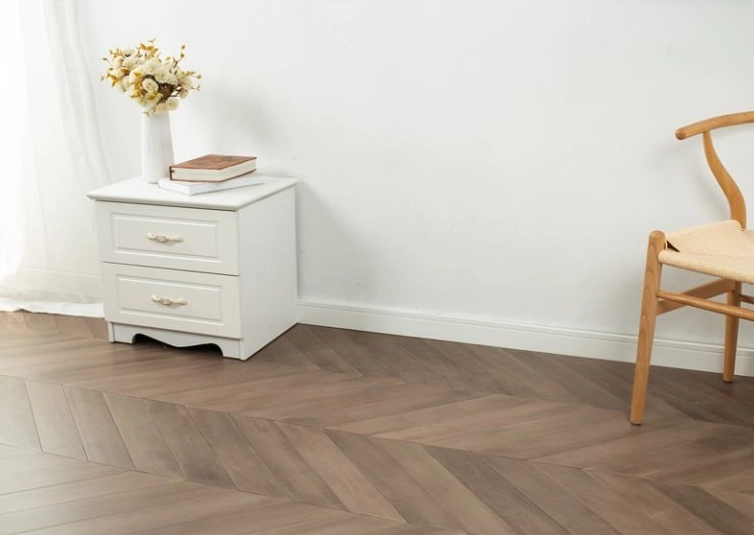
Why Is a Discount Engineered Wood Floor Cheaper but Still Worth Checking
A lower price can come from batch production, factory-direct sales, stock planning, or a limited color run. These reasons are normal. But a low price can also hide weak core material, unstable edge processing, thin surface layers, or unclear warranty terms. Buyers should separate a real sale from a low-grade clearance item.
Factory-Direct Pricing vs Low-Grade Clearance
Factory-direct pricing gives buyers more room to ask questions. You can confirm size, structure, finish, package, sample policy, mixed container planning, and repeat order availability. Low-grade clearance usually gives less control. The product may be cheap, but it may not match later replenishment or project consistency.
For buyers searching for engineered wood flooring on sale, supplier transparency matters more than the discount label.
Quality Control From Raw Material to Finished Flooring
A sale product still needs normal quality checks. Buyers should review veneer selection, core bonding, sanding, edge shaping, coating, color control, moisture handling, and packing. These steps affect whether the floor looks consistent after delivery and whether the boards fit well during laying.
YEHUI’s process focuses on material selection, drying, moisture control, sanding, sizing, surface treatment, and lacquer finishing. This kind of process control gives buyers a clearer basis for judging affordable engineered wood flooring.
The Real Value Behind a Lower Purchase Price
A low purchase price only has value when it does not create extra cost later. Color mismatch, weak edge fit, surface complaints, or unclear replacement terms can quickly reduce the saving. A discount engineered wood floor should still match the room style, order quantity, structure requirement, and maintenance plan.
What Structure Should You Check Before Ordering
The structure is the part buyers cannot judge from a photo. Two floors may look similar online, but veneer thickness, total thickness, plywood core, and edge profile can be different. For Engineer wood flooring, structure review should come before color selection.
Veneer Thickness and Total Flooring Thickness
Veneer thickness affects surface feel, processing depth, and long-term product value. FD-YH-02 uses a 2200×240×15/4mm structure, which gives it a stronger wide-plank visual effect. QH1902 is listed with 1210×165×15mm or other sizes. 1921 offers 12/14/15mm thickness options.
These details help buyers match floor height with doors, skirting, transitions, and existing project drawings.
Core Material and Dimensional Stability
Core material supports the surface layer. It affects whether the board remains stable when indoor temperature and humidity change. FD-YH-02 uses SF-grade Finnish spruce plywood. QH1902 uses eucalyptus plywood or birch. 1921 uses a multi-layer plywood core.
For a discount engineered wood floor, the core should not be treated as a hidden detail. If the core is weak, the buyer may face gaps, edge movement, or board deformation after use.
T&G and Click Lock Installation Options
Edge design affects board connection. FD-YH-02 lists T&G and Click Lock options, while QH1902 uses T&G tongue and groove. Buyers should confirm this before ordering because edge systems influence laying method, board adjustment, and later repair.
YEHUI’s double tongue-and-groove locking concept is also worth checking when buyers compare sale flooring. Cheap engineered boards often fail at the joint area first. Temperature and humidity changes can cause expansion or shrinkage. If the joint design leaves poor movement space or weak bite, the result may be visible gaps, raised seams, or cracked edges. The double-groove and double-locking idea uses two groove positions to strengthen bite and sealing. It is not just a decorative detail. It is a lower-level structural check that helps buyers avoid “low price now, repair cost later.”
Which YEHUI Product Fits Different Sale Flooring Needs
Product selection should follow the project, not only the discount. A dark wide plank, a natural oak surface, and a flexible color option serve different buyers.
FD-YH-02 for Dark Wide-Plank Premium Projects
FD-YH-02 is suitable when buyers want a darker wide-plank look. It uses European Oak, a 2200×240×15/4mm structure, 3-ply engineered construction, ENF emission standard, and an Italian water-based spray finish.
This model fits projects that need a stronger visual surface and wider board rhythm. Since dark colors show surface texture more clearly, buyers should review samples under actual indoor light before confirming bulk order.
QH1902 for Natural Oak Texture and Practical Interiors
QH1902 fits buyers looking for oak engineered wood flooring with a warmer, more natural look. It uses European Oak, brushed and oiled finish, eucalyptus plywood or birch core, and T&G tongue and groove.
This model works well for residential rooms where the buyer wants texture without making the floor too visually heavy. The brushed surface should be checked by hand, not only by product photos.
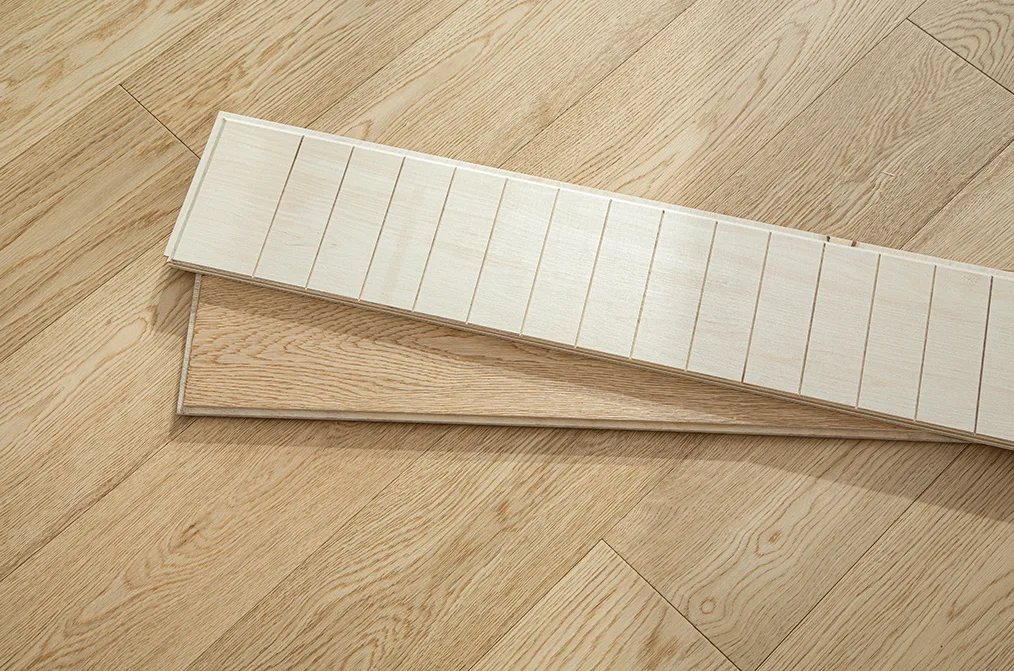
1921 for Multi-Color Selection and Long-Term Residential Value
1921 is useful when the project needs more selection space. The product page lists oak, walnut, maple, and teak options, 12/14/15mm thickness choices, wire brushed UV lacquer, E0 formaldehyde emission, and a 20-year residential warranty.
For engineered wood flooring for residential projects, 1921 gives buyers more flexibility when different rooms need different visual effects under one order plan.
What Safety, Finish, and Maintenance Details Should You Compare
A discount does not reduce the need to check indoor safety and finish performance. Many later complaints come from odor, surface marks, color differences, unclear cleaning rules, or poor communication after delivery.
Formaldehyde Emission and Indoor Safety
Indoor safety should be confirmed before bulk order. FD-YH-02 lists ENF emission standard. 1921 lists E0 formaldehyde emission. These details help buyers screen products more carefully. If a supplier cannot explain the emission level, the low price is not enough reason to proceed.
Surface Finish and Scratch Resistance
Finish affects daily use and appearance. FD-YH-02 uses Italian water-based spray. QH1902 lists a high scratch-resistant coating. 1921 uses wire brushed UV lacquer.
Buyers should ask for close-up photos or physical samples. Dark colors, brushed textures, and oiled looks all show marks differently. A discount engineered wood floor should be judged by how the finish fits the actual room, not only by catalog color.
Installation and Maintenance Cost Control
Maintenance cost starts before the floor is used. If the product is hard to match, difficult to adjust, or unclear in care requirements, the final cost rises. Buyers should confirm edge type, packing, replacement policy, and cleaning guidance. A reliable engineered wood flooring supplier should give practical answers based on the selected model.
How Should Buyers Work With YEHUI Before Placing an Order
Before placing an order, buyers should move from browsing to verification. The goal is to reduce uncertainty around sample, color, size, structure, package, quantity, and after-sales response.
Sample Review Before Bulk Purchase
Sample review helps avoid wrong expectations. Buyers should check color under indoor light, touch the surface, inspect the edge profile, and compare the sample with wall and furniture materials. For a discount engineered wood floor, this step is especially useful because the buyer needs to know what is discounted and what remains unchanged.
Custom Size, Color, and Package Matching
FD-YH-02 and QH1902 mention custom sizes, colors, packages, flexible MOQ, and mixed loading options. This helps B2B buyers balance budget, container planning, and design needs. The key is to discuss what can be adjusted before treating the sale price as final.
Service, Contact, and After-Sales Confirmation
Service terms should be confirmed in writing. Buyers should ask about complaint handling, warranty scope, replacement terms, packing condition, and how quality issues are reviewed after delivery. This step is part of cost control, not only after-sales communication.
Abschluss
Before ordering any discount engineered wood floor, check the reason behind the lower price, then review structure, core material, edge system, surface finish, emission level, samples, packing, and service terms. FD-YH-02 is suitable for dark wide-plank interiors. QH1902 fits natural oak-style rooms. 1921 gives more color and thickness selection for residential projects. A low price is useful only when the floor still fits the space, order plan, and later maintenance needs.
For buyers comparing samples, confirming structure, or matching one order to several room styles, YEHUI can help review product details before production discussion. Share the room use, preferred color, thickness requirement, package needs, and order quantity through the Kontakt page, so the team can respond with more relevant product information instead of a generic catalog.
FAQ
Q: Is a discount engineered wood floor always lower in quality?
A: No. A discount engineered wood floor may come from factory-direct pricing, batch planning, or stock adjustment. Buyers should still check structure, veneer thickness, core material, finish, emission level, edge system, and service terms.
Q: Why does joint design matter when buying engineered wood flooring on sale?
A: The joint area affects how boards respond to temperature and humidity changes. A weak joint may lead to gaps, raised seams, or cracked edges. Double tongue-and-groove locking logic gives buyers one more structural point to check before bulk order.
Q: Which YEHUI model is better for a dark wide-plank look?
A: FD-YH-02 is more suitable for this need because it uses European Oak, a wide plank format, a 15/4mm structure, and a darker visual style. Buyers should review a sample before confirming order quantity.


 German
  English
  Spanish
  Arabic
  French