

Spanish importers and distributors often need more than one parquet look in a collection: a repeatable geometric model for regular stock, a formal European-style pattern for design-led projects and a distinctive statement floor for higher-value enquiries. The right parquet flooring supplier Spain should help define those roles with clear construction, finish and repeat-supply controls.
YEHUI makes Multi-Layer Engineered Wood Flooring and artistic parquet formats, with production bases in Huzhou and Jinan. Its value for a Spanish buying program is best judged through practical questions: can the supplier hold the approved module, face layer, surface reference and packing method when the first sample becomes a bulk order?
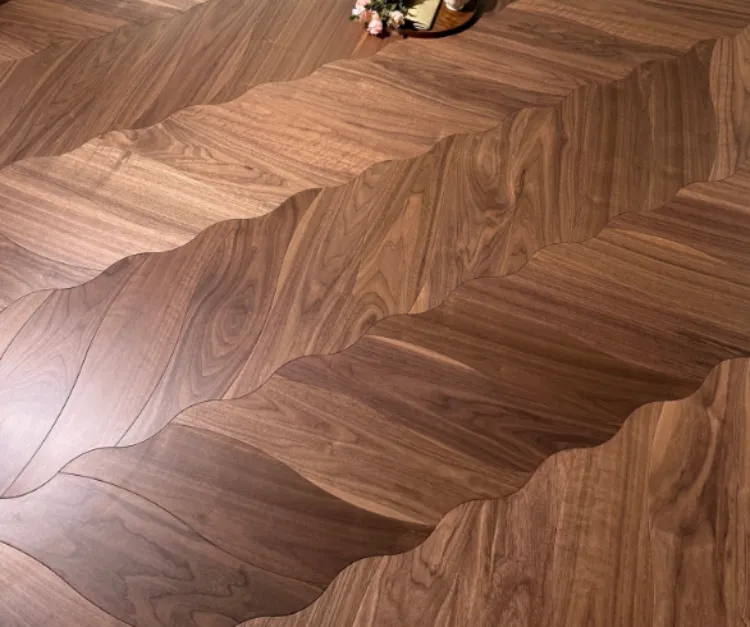
Which Parquet Patterns Can Build a Spanish Product Range?
A useful range has visible differences, but each model still needs a clear commercial job. Pattern choice should be tied to room scale, drawing coordination, sampling effort and the type of customer likely to buy it.
LZY22 for a Repeatable Geometric Assortment
Parquet Flooring-LZY22 uses a standard 630 × 165 × 15 mm module. That regular format can serve as a core geometric option when a distributor wants a design that is easy to show, quote and replenish. The key is to approve the module as an assembled unit, not to judge a single loose piece.
Record the dimensions, repeat point, border relationship and surface reference together. This helps a Spanish parquet flooring supplier conversation stay focused on a product that can be explained consistently across samples, quotations and cartons.
LZP1001 for a Versailles-Inspired Project Offer
Parquet Flooring-LZP1001 uses a Versailles-inspired parquet design. Its visual value comes from formal geometry and proportion, so the buyer should review the full repeat, border and transition to plain boards before approving it for a project offer.
This model may suit a design-led program rather than everyday shelf stock. A written layout drawing is important because an elegant pattern can lose its balance when the room perimeter or doorway is handled without a planned transition.
LZY26 for Irregular Pentagon Statement Floors
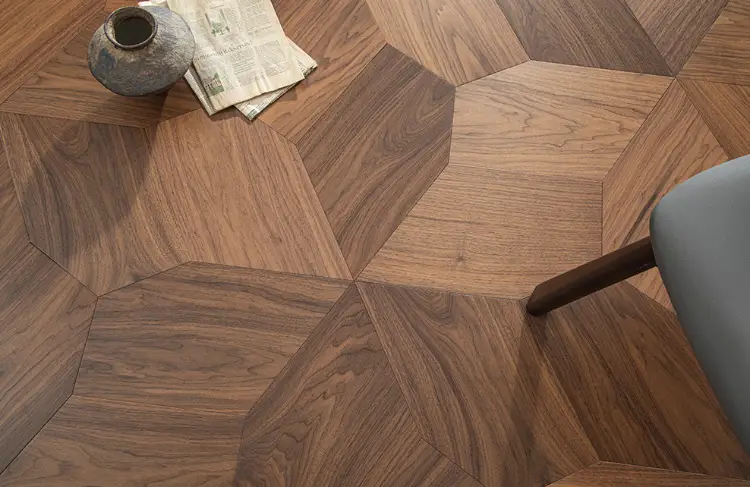
Parquet Flooring-LZY26 uses an irregular pentagon joining structure. That makes it useful as a statement choice, but it also increases the need for an assembly reference. Buyers should check how the pentagon repeat is packed, identified and connected at the edge of a room.
Keep this model distinct from the core geometric option in the catalogue. A buyer can then explain why the pattern has a different sampling process and project role without making unsupported claims about performance.
How Should Construction and Finish Be Specified?
Pattern is only one part of the purchase decision. Construction and surface details determine whether the sample can be translated into a repeatable product specification.
Multi-Layer Engineered Construction for Patterned Modules
Multi-Layer Engineered Wood Flooring uses layers arranged in different directions as the base structure. For patterned modules, this construction gives the buyer a defined foundation for discussing movement, thickness and face-layer requirements. It does not replace destination-specific storage and project planning, but it is more useful than a pattern name by itself.
Write the core construction into the quotation and product code. If the same pattern is available with different structures, treat those as separate approval paths so a decorative sample cannot be matched to the wrong bulk construction. This is a basic Spanish parquet flooring supplier control.
Custom Wear Layer and Total Thickness
The face layer can be customized to 3 mm, 4 mm or 6 mm. Select the thickness according to the range position and future maintenance plan, then repeat the same choice on the sample card, purchase order and inspection record. A thickness change may also affect door junctions and transitions with other floor materials.
This is a central engineered parquet bulk supply check. A parquet flooring supplier Spain should be able to discuss face layer, total thickness and pattern module as one joined specification rather than three unrelated catalogue details. Repeat the same engineered parquet bulk supply fields in the order. Buyers can use parquet flooring supplier Spain as a practical search term when comparing factories for repeat supply.
UV-Cured Finish and Approved Surface Sample
UV coating can cure under high-intensity UV light in seconds to tens of seconds. The cured surface is discussed through characteristics such as hardness, wear resistance and adhesion. Those process characteristics support a controlled finish line, but they should not be turned into an unsupported lifetime or certification claim.
Approve sheen, texture, edge treatment and accepted natural tone variation on a physical sample. Review it under neutral lighting and keep its code beside the pattern drawing. If the finish changes, require a new approval or a signed deviation.
What Keeps a Bulk Order Consistent From Sample to Shipment?
Consistency is created by linking the sample to the production and inspection records. This is where a design choice becomes a product that a distributor can reorder without starting from zero.
Full-Panel Sampling and Pattern Alignment
Request a full pattern panel for LZY22, LZP1001 or LZY26. The panel should show one complete repeat, the edge condition and any transition that will appear in the project. Check whether lines converge as expected and whether the module can be described without relying on a photograph.
For a broader assortment plan, buyers can also plan cleaner transitions between patterned flooring zones. The point is not to copy another pattern, but to make sure the selected parquet can meet adjacent areas with a planned visual break.
Machine and Manual Inspection Before Packing
Dimensions, thickness, moisture content and stability should be inspected before packing. YEHUI uses both machine and manual checks for these areas. A buyer should agree on the sampling method, lot record and release decision in advance, especially when a small dimensional difference can become visible across a geometric repeat.
Ask how the approved sample code appears in the inspection documents. That simple connection makes it easier to separate a finish issue from a dimensional issue when a batch needs review.
Lot Coding, Carton Identification and Spare Quantity
Cartons should identify the model, finish reference and production lot. For complex parquet, also record the module direction or component arrangement where it affects assembly. Replacement stock should be discussed before the first shipment, because later material is easier to match when the original references still exist.
Do not treat packaging as an afterthought. A strong parquet flooring quality control system includes enough identification for the warehouse and project team to know which cartons belong to the same approved specification.
How Should Importers Balance Stock Models and Project Models?
The best range is not always the most varied one. It is the range a sales team can explain and a supply team can repeat.
Use Repeatable Geometry for Core Inventory
LZY22 can occupy the core position when a distributor needs a repeatable geometric model. Keep its product code, 630 × 165 × 15 mm module, finish and packing reference stable. Core inventory should be easy to sample and easy to compare with the reorder record.
Reserve Complex Patterns for Sample-Led Orders
LZP1001 and LZY26 can be presented through project samples where design proportion and room scale matter. This reduces the risk of carrying a complex pattern without knowing which module, border or finish customers actually prefer. The buyer can confirm the full layout before committing to a larger lot.
Plan Pattern Transitions Before Quotation
Ask for a drawing that shows how each pattern meets a straight board, another parquet model or a border. Quote the transition work as part of the project discussion. This is particularly important for a European style parquet flooring program where the appeal depends on proportion, not only on the central motif. The drawing should remain with the European style parquet flooring sample.
The practical selection order is pattern role, module, construction, face layer, finish, inspection, packaging and transition. A reliable parquet flooring supplier Spain should be able to keep that chain visible from the first quotation to repeat supply. This is why a parquet flooring supplier Spain should be judged on specification control, not only on a low quotation. A low unit price cannot repair a pattern that was never defined clearly.
Contact YEHUI About a Spanish Parquet Collection
Define the Core and Statement Pattern Mix
Share which model is intended for regular stock, which is project-led and which customer segments each one should serve. Include expected volumes and room types without asking the factory to guess the range structure.
Request Construction and Finish Samples
Request an assembled panel, construction details, face-layer choice, finish sample, packing reference and inspection method. Keep one approval record for each model.
Send the Sourcing Brief Through the YEHUI Contact Page
Importers can submit the brief through the YEHUI-Kontaktseite. Include the pattern drawing and sample codes so the discussion starts with the same references used by the purchasing team.
FAQ
Which Parquet Patterns Are Practical for a Spanish Import Range?
A parquet flooring supplier Spain range can combine a repeatable geometric model such as LZY22, a formal Versailles-inspired design such as LZP1001 and an irregular pentagon statement pattern such as LZY26. The decision should reflect stock turnover, project sampling and the ability to control each module.
What Should Buyers Approve on a Parquet Finish Sample?
Approve sheen, texture, edge treatment, accepted natural tone variation, construction, face layer and total thickness. Review the physical sample beside the pattern panel and record its code. Screen images can support discussion but should not replace the retained sample.
How Can a Parquet Flooring Supplier Spain Support Repeat Orders?
Use stable product codes, approved pattern panels, written construction and finish specifications, lot identification and inspection records. Keep the module, surface reference and packaging details connected so a repeat order does not depend on memory or a loose photograph.


 German
  English
  Spanish
  Arabic
  French