

Australian apartment and renovation buyers usually need a flooring supplier who can keep a design consistent across several rooms, several buildings, or several purchase orders. The brief may begin with a pattern, a sample board, and a delivery window. The difficult part is keeping the approved look and construction stable when a project moves from design review to repeat supply. This guide explains what a B2B buyer should check when comparing an engineered parquet flooring Australia supplier, including product construction, pattern control, sample approval, documentation, and communication.
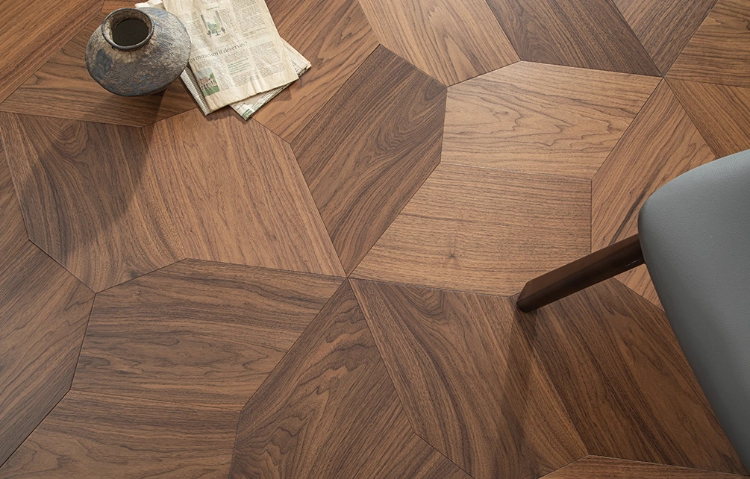
Start with the construction behind the pattern
Parquet is a visual decision, but the project still depends on what sits below the face layer. YEHUI’s supplied knowledge describes engineered flooring as a product made with cross-arranged layers as the core and a selected wood face layer pressed with adhesive under heat and pressure. That structure is useful for apartment and renovation procurement because the buyer can specify the appearance while also discussing dimensional behaviour, board format, and moisture control with the factory.
For an Australian project, ask the supplier to state the construction in a product sheet rather than using a broad word such as “parquet.” Confirm the core type, face layer, total thickness, plank dimensions, edge profile, surface finish, and packing method. If the specification calls for a thicker face layer, state that 3mm/4mm/6mm can be customized when confirmed by the factory. Do not let a catalogue image become the only specification.
The cross-layer structure is also relevant when a project moves between different rooms or buildings. The knowledge base notes that engineered construction helps address deformation, cupping, and cracking associated with a single-direction board. That does not remove the need for project moisture planning, but it gives an importer a clearer product conversation than a style name alone.
Check the pattern and dimensions before quoting volume
Renovation drawings often show a pattern without enough information for production. Ask for the exact parquet layout, the direction of the chevrons or blocks, board length and width, joint details, and the percentage of border or transition pieces. For apartment projects, a small change in module size can alter room proportions and packing calculations.
Herringbone, Chevron, and artistic parquet are different briefs
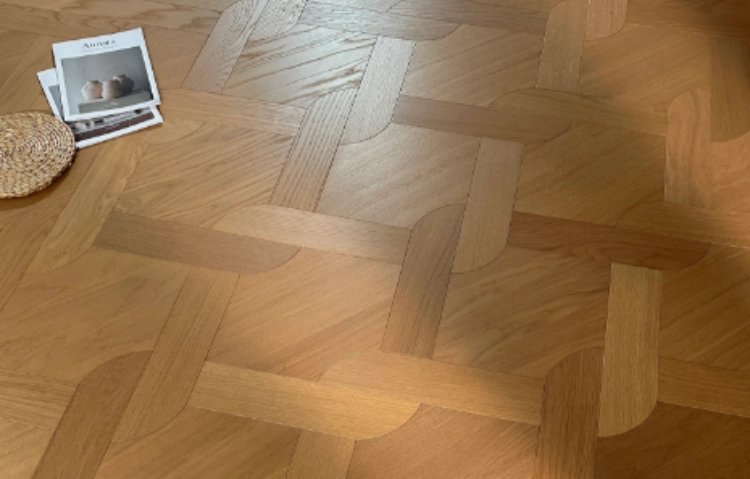
Use the term Chevron wood flooring when the ends meet to form a clean V. A herringbone layout uses offset ends. An artistic parquet floor can combine blocks, borders, or a repeat that is unique to the design. Put the chosen pattern in the purchase specification and attach a marked drawing. That makes it easier for the Australian importer, designer, and supplier to discuss the same product.
von YEHUI parquet flooring collection shows how engineered parquet can be developed in more than one visual format. For a renovation contractor, the useful question is whether the selected module can be repeated in the next order with the same geometry and surface direction.
Treat the sample as an approval standard
A sample should answer more than “does the colour look right?” Record the wood selection, face grading, knots or mineral marks, gloss level, brushing or other surface treatment, module size, and edge details. Photograph the approved sample beside a ruler and keep the approval version in the project file. If several finishes are being considered, label each one with a product code.
Build a sample checklist for Australian project teams
Ask for a sample of the actual construction and finish, not a smaller decorative card. Check the face direction, the repeat between pieces, the joint alignment, the back construction, and the way the surface reads under the project lighting. A renovation contractor can then compare the sample with the drawing before quantities are released.
The knowledge base also stresses that wood veneer thickness should be considered together with the equilibrium moisture content of the destination region. For a buyer, this means asking the supplier what moisture information is used for the batch and what documentation will accompany the shipment. It is a practical procurement question, not a marketing claim.
Review production control and repeat orders
An engineered parquet flooring Australia supplier should be able to explain how raw material, machining, surface finishing, packing, and storage are checked. YEHUI describes control from raw material procurement through processing and storage, with inspection of the finished product. Ask how a batch is identified, how dimensions are sampled, and how the supplier records the approved face and finish.
For repeat renovation work, agree on a reference sample and a tolerance sheet. The sheet can list length, width, thickness, joint fit, surface gloss, colour range, and allowable natural variation. This gives the buyer a way to compare a second order with the first order without demanding that every board look artificially identical.
The supplied knowledge base also describes UV-cured coatings as a production technology that can cure quickly and form a hard, wear-resistant surface with good adhesion. If a UV finish is proposed, ask for the exact finish name, sheen, care guidance, and a sample that has passed the supplier’s normal inspection. Keep the language factual and avoid attaching unsupported certifications.
Confirm customization and OEM communication
Apartment developers, renovation contractors, and distributors may need a private product code, a different carton label, or a matched group of parquet patterns. YEHUI’s OEM/ODM flooring service describes a sequence of consultation, design and sample development, contract confirmation, manufacturing, and delivery. That sequence is useful for a B2B buyer because each stage creates a decision point.
Ask the supplier to separate design changes from production changes. A new board size, face selection, or finish may affect yield and lead time. Put the approved drawing, product code, packaging language, and inspection point in the order file. If the product will be sold under a distributor’s brand, confirm which documents carry the private code and who owns the final artwork.
Plan supply for apartment and renovation schedules
A good procurement plan connects the site schedule to factory actions. Share the required sample date, purchase order date, target production window, packing requirements, and shipping destination. For a renovation contractor, staged delivery may be more useful than a single large shipment. For an importer, a repeatable carton count and clear pallet information can reduce warehouse surprises.
Do not accept a promised date without asking what it includes. Clarify whether the date refers to sample completion, production completion, or dispatch. Ask how changes are handled after sample approval and what happens if a requested material is unavailable. These questions help a buyer compare suppliers on real project support rather than on a catalogue alone.
Why buyers shortlist YEHUI for this brief
YEHUI presents itself as a flooring manufacturer based in Hangzhou, Jinan and Shandong, and product categories that include engineered wood flooring and parquet. Its engineered wood flooring range gives importers a starting point for comparing plank and parquet formats, while the OEM/ODM process provides a route for private specifications.
The fit for an Australian apartment or renovation project should still be tested through a written brief and an approved sample. A buyer should ask for construction details, dimensions, finish information, packing data, and a realistic production schedule. When those points are clear, the supplier relationship is easier to manage across repeat orders.
FAQ for B2B buyers
What should an Australian importer send first?
Send the pattern drawing, target dimensions, face preference, finish, estimated quantity, delivery location, and required sample date. If a project has several apartment types, list the quantity for each type.
Can engineered parquet be specified for a renovation supply program?
Yes, if the supplier can document the construction, repeat the approved pattern, and keep product codes and inspection points consistent. The buyer should approve the sample before releasing the production quantity.
What makes a supplier easier to manage?
Clear product sheets, responsive sample revisions, traceable product codes, practical packing information, and a written process for changes make project communication easier.
For an Australian procurement team, the best engineered parquet flooring Australia supplier is the one that can turn a design brief into a stable, repeatable product specification. Pattern accuracy matters, but so do construction details, sample control, production records, and communication after the purchase order.


 German
  English
  Spanish
  Arabic
  French