In the current flooring industry, style goes beyond mere substances, and instead, layout, arrangement, and visual pace play central roles as developers, sellers, and brand managers pick items for their work. Chevron and Herringbone patterns emerge as two prominent designs, frequently appearing in upscale settings for homes and businesses alike.
YEHUI has developed a solid range of products centered on these enduring patterns, blending engineered wood builds with adaptable personalization features. By emphasizing dependable assembly and quality prepared for overseas distribution, their Chevron and Herringbone series find broad application in initiatives requiring both aesthetic appeal and steady availability.
Why Are Chevron and Herringbone Flooring Styles Always in Demand?
In various regions, these patterns continue to appear consistently, and this stems not only from custom but also from their strong alignment with current style preferences. Whether in small luxury homes or named commercial areas, both designs provide a feeling of structure and motion that simple boards typically miss.
Distinctive Pattern Geometry and Visual Flow
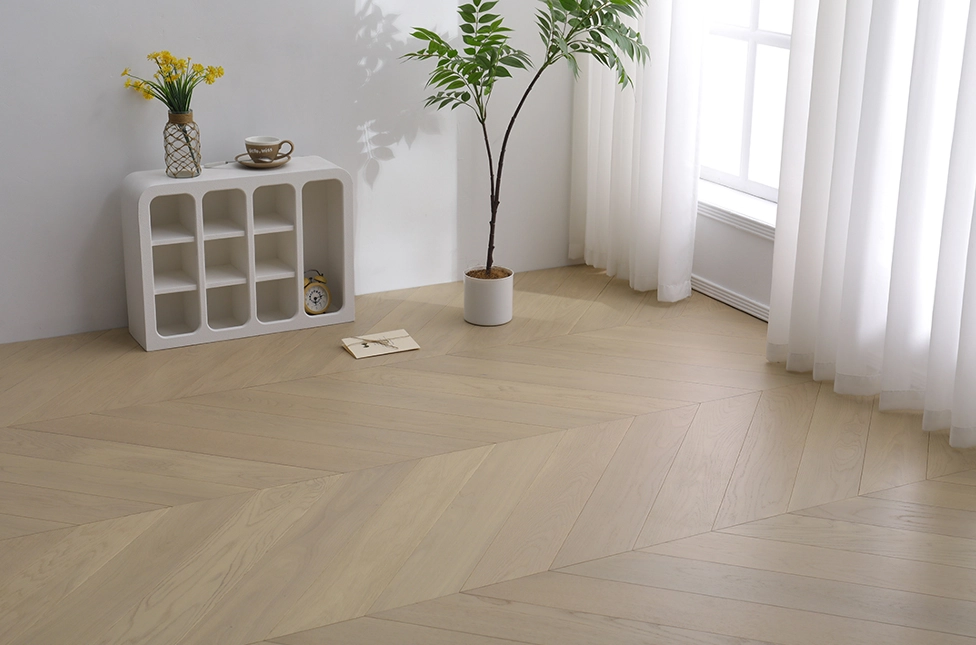
Chevron flooring employs slanted edges to form an ongoing “V” form, resulting in a neat and guided appearance, whereas Herringbone positions straight boards in an offset zigzag arrangement, yielding a richer and more varied texture. Consequently, these shapes naturally direct the gaze, thereby making rooms seem more lively without introducing additional adornments.
Architectural Depth and Spatial Enhancement
Each pattern contributes to outlining areas in a gentle manner, since Chevron often generates a sense of guidance, which proves effective in extended hallways or spacious open designs, and Herringbone introduces greater diversity, rendering it appropriate for environments favoring a milder, less straight-line sensation. Moreover, this visual layering frequently proves essential in ventures where the floor must support elements of the overall scheme.
Compatibility With Modern and Classic Interiors
A primary factor behind the enduring popularity of these designs lies in their versatility, as they integrate smoothly with contemporary simple setups, yet they also blend readily into more customary or European-influenced arrangements. YEHUI aids this adaptability by providing diverse surface treatments and shades, allowing purchasers to tailor the appearance according to their intended audience rather than adhering to a single rigid form.
What Are the Key Differences Between Chevron and Herringbone Flooring?
Even though people often categorize them similarly, Chevron and Herringbone differ notably upon closer inspection, and for procurers and scheme coordinators, grasping these distinctions aids in preventing unsuitable outcomes during fitting or layout preparation.
Chevron Pattern With Angled Precision
In Chevron layouts, boards receive cuts at defined angles, commonly 45 or 60 degrees, so that they join flawlessly at the tips, thereby producing a crisp, unbroken line over the surface. Due to such exactness, Chevron flooring conveys a more official and organized vibe, positioning it as a favored option for upscale constructions.
Herringbone Pattern With Staggered Layout
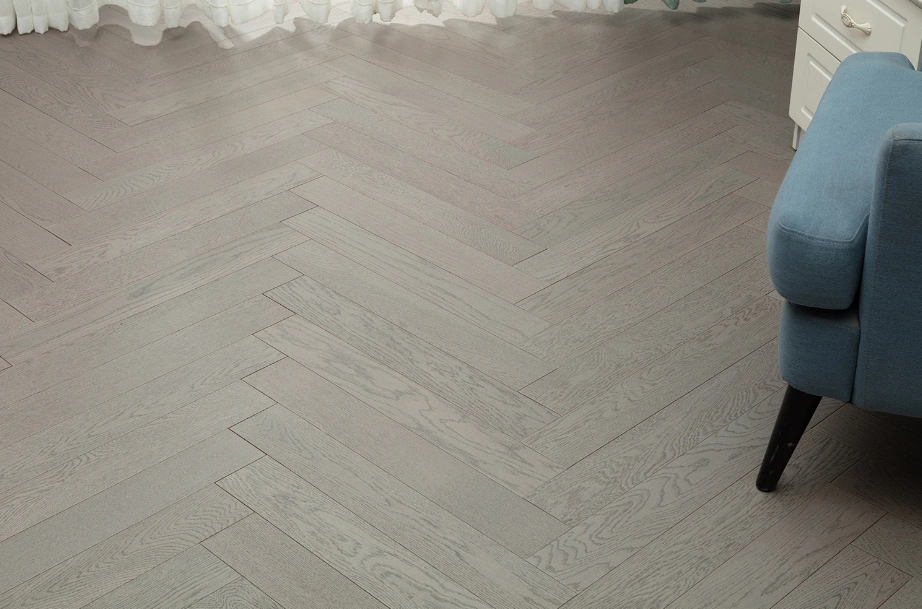
Herringbone relies on unmodified rectangular boards placed in a fractured zigzag configuration, where the edges fail to converge at a peak as in Chevron, which imparts a calmer and more time-honored aspect. This arrangement has endured for generations, and it remains recognizable to numerous audiences, particularly those in Europe and North America.
Visual Direction and Installation Structure
Chevron generates a robust sense of orientation, whereas Herringbone appears more dispersed and even, and regarding manufacturing, Chevron demands greater accuracy in trimming, while Herringbone permits somewhat more leeway in placement. YEHUI’s production methods accommodate both configurations, thereby simplifying selections for buyers grounded in style demands instead of fabrication constraints.
How Do YEHUI Herringbone Flooring Products Meet Project Needs?
Regarding Herringbone flooring, uniformity and substance durability hold significant weight, since YEHUI concentrates on engineered wood frameworks capable of withstanding diverse conditions, all while preserving the authentic wood aesthetic that clients anticipate.
CARB Phase 2 Certified Structural Reliability (S6011)
The S6011 Herringbone flooring suits ventures necessitating approved substances, as CARB Phase 2 adherence renders it fitting for areas enforcing rigorous indoor air standards, and this proves particularly beneficial for sellers engaging with North American partners who require thorough records and consistent provision.
Classic Oak Texture and Natural Aesthetic (9115)
The 9115 Classic Oak variant emphasizes a conventional wood facade, where the grain mimics natural patterns without excessive refinement, thereby functioning effectively in household and modest business contexts. It represents a dependable selection for schemes where the style leans moderate yet still seeks distinctiveness.
Flexible Customization and Mixed Loading Options
YEHUI facilitates alterations in measurements, surface coatings, and hue modifications according to venture specifications, and combined shipment arrangements also exist, which assist procurers in lowering transport expenses and optimizing stock management. Such adaptability frequently matters for dealers and site managers overseeing varied style plans simultaneously.
What Makes YEHUI Chevron Flooring a Premium Choice?
Chevron flooring typically occupies the upper price tier, largely owing to its framework and aesthetic influence, and YEHUI’s Chevron items receive development with these aspects in focus, prioritizing accuracy and uniformity between production runs.
Three-Layer Engineered Stability Structure
Variants such as DGY-02 et DGY-01 incorporate a three-layer engineered wood setup, which enhances size steadiness, particularly in settings subject to shifts in warmth and moisture levels, and furthermore, it renders the flooring more apt for extended transport and assorted fitting scenarios.
Precision-Cut Angles for Seamless Pattern Alignment
A crucial element in Chevron flooring involves the degree to which angles match up during assembly, since YEHUI applies meticulous trimming methods to maintain uniformity across each board, thereby minimizing spaces and positioning problems at the location. This approach enables site workers to operate with greater speed and attain a smoother end product.
Custom Sizes, Finishes, and Color Options
Ventures commonly need particular proportions or shade variations to align with decor ideas, and YEHUI provides personalization in board length, surface processing, and color ranges. Consequently, this enables procurers to modify the item for their audience instead of reshaping the scheme around preset choices.
How to Choose Between Chevron and Herringbone for Your Project?
Selecting between these designs does not solely hinge on superior appearance, but rather, it frequently relates to the venture category, intended client base, and general style orientation, and a sensible method generally yields the best results.
Design Style and Target Market Positioning
Chevron often conveys a contemporary and firm impression, fitting upscale residences or identified commercial zones, whereas Herringbone imparts a more established and approachable quality, facilitating broader sales potential. Thus, procurers ought to evaluate client anticipations prior to finalizing their pick.
Room Layout and Visual Impact Goals
Extended and slim areas frequently gain from Chevron’s guiding pattern, and broader or uneven configurations might pair better with Herringbone’s even appearance. Although not an absolute guideline, this insight aids in directing choices during initial planning phases.
Supply Chain Flexibility and Custom Requirements
From a provisioning viewpoint, both patterns come with personalization via YEHUI, yet timelines for projects, shipment packing strategies, and item combinations warrant consideration as well. Partnering with a provider offering adaptable output can substantially aid when venture specifics evolve midway.
FAQ
Q1: What is the main visual difference between Chevron and Herringbone flooring?
A: Chevron forms an unbroken “V” shape featuring pointed joins, while Herringbone constructs a fractured zigzag arrangement, and overall, Chevron appears more oriented, whereas Herringbone seems more equilibrated and customary.
Q2: Are YEHUI flooring products suitable for export markets?
A: Indeed, YEHUI items receive design with global benchmarks in view, and features like CARB Phase 2 approved Herringbone flooring position them well for regions with stringent demands, encompassing North America.
Q3: Can Chevron and Herringbone flooring be customized for specific projects?
A: YEHUI enables alterations in dimensions, hues, and surface treatments for both patterns, which permits sellers and site coordinators to align with diverse style necessities without confinement to routine details.


 French
  English
  Spanish
  Arabic
  German