

Wood Flooring Wastage is not just a small extra percentage added at the end of a flooring order. For buyers, contractors, distributors, and project teams, it affects budget, delivery timing, batch matching, and whether the project can finish without waiting for extra boards. If the allowance is too low, the final room, edge cut, or patterned section may become a problem. If it is too high, unused material sits in storage and raises the project cost.
The real question is how much extra wood flooring to order for your exact layout. A straight plank floor, Herringbone Flooring, Chevron wood flooring, and parquet design do not create the same cutting loss.
YEHUI supplies Multi-Layer Engineered Wood Flooring, Herringbone Flooring, Chevron wood flooring, Parquet Flooring, and flooring solutions for international buyers. Its product range includes simple plank formats, decorative patterned floors, and Unique artistic parquet floor options. That gives buyers more room to match the flooring type with the wastage plan instead of using one fixed percentage for every project.
How Much Extra Wood Flooring Should You Order?
Most projects start with the measured floor area, then add a wood flooring waste factor. This factor covers cutting loss, layout adjustment, board selection, pack rounding, and spare boards for later repair. The right allowance depends on the floor format and the project drawing, not only on the room size.
Start with the Measured Floor Area
Measure each room or zone separately. Do not use one rough total if the project includes different layouts, connected spaces, or several product types. A straight plank area and a patterned area should not share the same allowance.
Add a Waste Factor Based on Layout
For regular straight plank layouts, the allowance is usually lower because cut pieces are easier to reuse. For Herringbone Flooring, Chevron wood flooring, and parquet layouts, the allowance should be higher because pattern direction and angled cuts create more unusable offcuts.
Check Pack Size Before Final Ordering
Flooring is usually ordered by package, not by one loose board. If the calculated quantity falls between two pack quantities, round up carefully. This helps avoid shortage without turning the order into careless overbuying.
| Flooring Choice | Wastage Direction | Why It Changes | What Buyers Should Check |
|---|---|---|---|
| 1921 Engineer wood flooring | Lower to medium | Straight plank layouts usually allow easier offcut reuse | Net area, pack size, board direction, color code |
| Parquet de plancher en chêne gris | Plus haut | Herringbone pattern needs repeated angled cuts and pattern alignment | Laying direction, wall edges, door openings, center line |
| Qiuyu Unique artistic parquet floor | Drawing-based | Mixed colors, custom shapes, and angles need layout confirmation | Final drawing, panel direction, color mix, spare boards |
| Mixed commercial areas | Zone-based | Different zones may use different layouts or product formats | Separate area calculation by room or layout type |
This table should be used as a first check only. Final order quantity still needs to be adjusted by pack size, room drawing, product format, and spare-board requirements.
Why Does Wood Flooring Wastage Change by Product and Layout?
Wood Flooring Wastage changes because each flooring format handles cuts in a different way. A straight plank layout normally runs in one main direction. Patterned flooring needs repeated alignment, so fewer cut pieces can be reused.
Easier Quantity Control with 1921 Engineer wood flooring
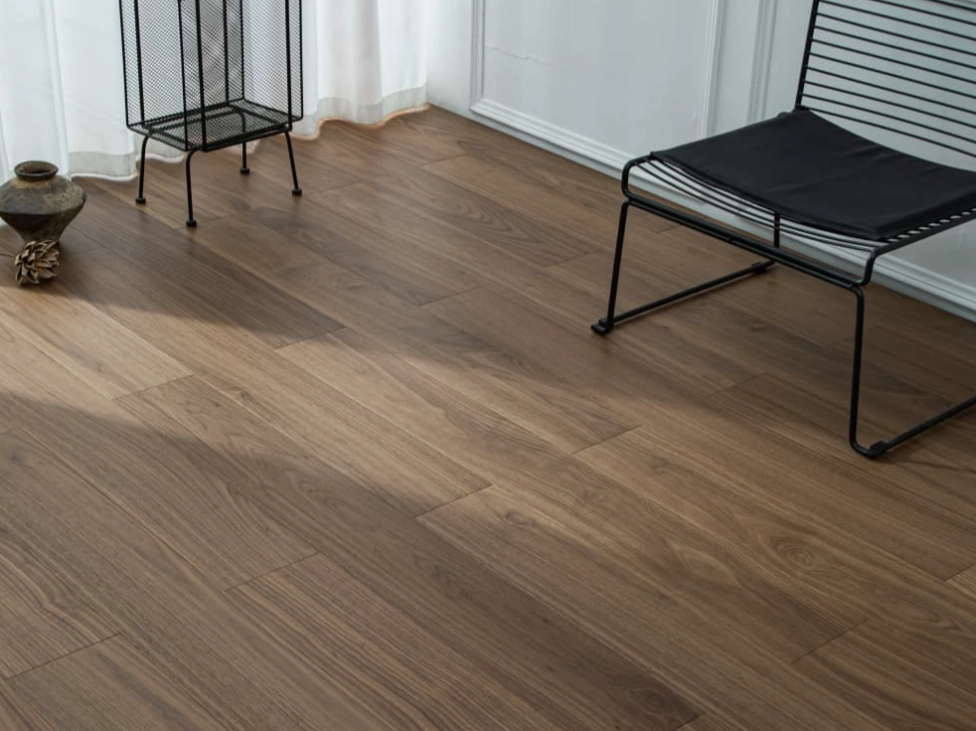
For straight plank projects, 1921 is easier to plan because it does not require the same pattern alignment as herringbone or parquet flooring. The product page lists it as an Engineer wood flooring plank option with a multi-layer plywood core, Wire Brushed UV Lacquer finish, several available color codes, and wood options such as oak, walnut, maple, and teak.
Buyers can use 1921 when they want a cleaner quantity calculation, then confirm color code, pack size, and spare boards before the order. It suits projects where the layout is regular and the floor direction is already clear.
Higher Herringbone Flooring Wastage Allowance
A herringbone flooring wastage allowance is usually higher because each piece must follow a fixed direction. Angled cuts at room edges, door openings, and border areas create smaller pieces that may not fit the next section.
Parquet de plancher en chêne gris works better for projects where the floor is part of the design language. Its grey tone and herringbone pattern can suit living rooms, boutique interiors, showrooms, and design-led apartments. The design value is stronger, but the buyer should reserve more material for alignment, edge cutting, and visual consistency.
Drawing-Based Planning for Qiuyu Parquet Flooring
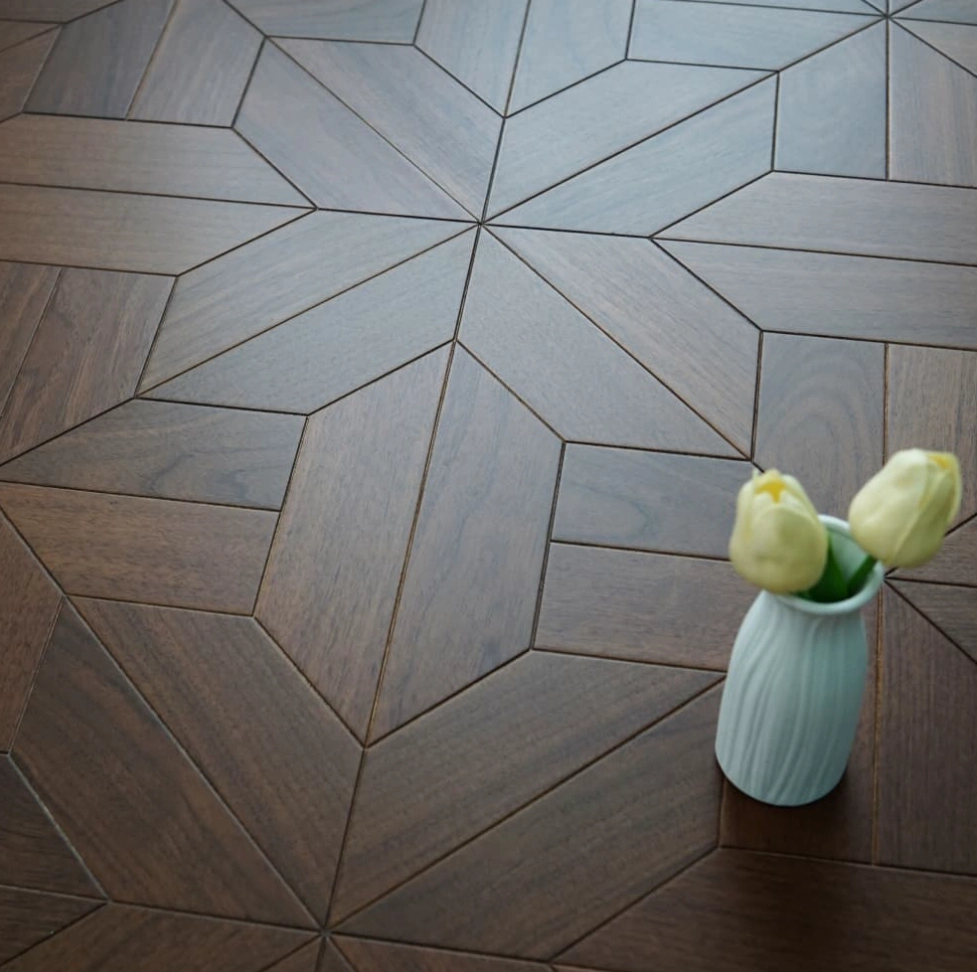
Parquet flooring has another layer of planning. Qiuyu is a Unique artistic parquet floor option with mixed colors, customizable shapes and angles, and low VOC information listed on the product page.
Because the design can involve color mix and panel direction, buyers should not calculate the order from area alone. The final drawing, panel direction, color mix, and spare-board plan should be checked before confirming quantity.
How Do You Calculate Wood Flooring Wastage Before Ordering?
To calculate wood flooring wastage before ordering, start with the net floor area, then apply the right waste factor by layout. If one area uses plank flooring and another uses patterned flooring, calculate them separately. This gives a more useful result than applying one allowance to the whole job.
Separate Each Room or Zone
Split the project by room, floor direction, and product type. If a project includes straight plank areas, Herringbone Flooring areas, and parquet panels, each one should have its own calculation. This is especially useful for wood flooring wastage for commercial projects, where several spaces may follow different design requirements.
Use a Simple Waste Factor Formula
A simple formula can help:
Total Order Area = Net Floor Area × Waste Factor
For example, if the measured area is 100 square meters and the buyer adds 10%, the order area becomes 110 square meters. If the same area uses a more complex pattern and the buyer adds 15%, the order area becomes 115 square meters. These numbers are only examples. The final figure should be checked against product format and pack size.
Keep Spare Boards from the Same Batch
For visible areas, keeping spare boards from the same batch is safer than trying to reorder later. A very low allowance may look cheaper on paper, but it can create extra cost if the project later needs a matching batch, replacement boards, or delayed reordering.
How Should Buyers Match YEHUI Products with the Wastage Plan?
Product selection should come before the final wastage decision. A buyer should not use the same allowance for every flooring type, because each product has a different layout logic and cutting behavior.
1921 for Straight Plank Layouts
Choose 1921 if the project uses a straight plank layout and the main concern is easier quantity control. This product is a practical starting point for apartments, offices, sample rooms, and regular interior projects where the floor direction is clear and the design is not built around complex pattern cuts.
Grey Oak Herringbone flooring for Decorative Patterned Areas
Choose Grey Oak Herringbone flooring if the floor needs stronger visual rhythm. The herringbone pattern gives the surface more movement, but it also needs more careful planning. The buyer should expect a higher allowance and should confirm the center line, laying direction, and room edge cuts before placing the order.
Qiuyu for Custom Parquet Designs
Choose Qiuyu if the design uses parquet panels, mixed colors, or custom shapes. For commercial projects, wastage should be reviewed before the final product choice, especially when the floor includes mixed colors, custom angles, or several connected areas. The order should be based on drawings, not only on the measured floor area.
How Can Buyers Reduce Wood Flooring Wastage Without Creating Shortage?
Most avoidable waste comes from unclear project information: missing drawings, uncertain laying direction, wrong pack calculation, or late changes to the pattern. Better preparation helps the buyer control waste without taking the risk of ordering too little.
Clear Drawings Before Ordering
Before a buyer approves the final order, four details should be checked internally: measured floor area, laying pattern, product pack size, and spare-board plan. For a distributor, spare boards may affect after-sales replacement. For a contractor, they affect whether the same color batch is available if extra material is needed later.
Product Format Matched with Layout Complexity
A simple rule is this: use 1921 for cleaner straight plank planning, Grey Oak Herringbone flooring for decorative patterned areas with a higher allowance, and Qiuyu for parquet designs where drawings must guide the order. Lower wastage is useful only when it does not put delivery, batch matching, or finish quality at risk.
Service Communication Before Bulk Purchase
If a project uses more than one flooring type, do not calculate one total allowance for the whole job. Split the area by layout type, then add the wastage allowance for each zone. This makes the order more accurate and helps avoid both shortage and overbuying.
Project Support and Contact
If your project includes several rooms, mixed patterns, color matching, or container-based purchasing, prepare drawings and product requirements before confirming the order. YEHUI can review flooring type, pattern direction, pack quantity, spare-board planning, service needs, and shipping communication with buyers. For product details, samples, or order planning, share the project information through the contact page.
FAQ
Q: What Is Wood Flooring Wastage?
A: Wood Flooring Wastage is the extra flooring added to the measured area before ordering. It covers cutting loss, layout adjustment, board selection, pack rounding, and spare boards. It helps reduce the risk of shortage during the project.
Q: How Much Extra Wood Flooring Should I Order for Herringbone Flooring?
A: Herringbone flooring usually needs a higher allowance than straight plank flooring because angled cuts and pattern alignment create more offcuts. For Grey Oak Herringbone flooring, confirm the room plan, laying direction, edge cuts, and pack size before deciding the final herringbone flooring wastage allowance.
Q: Why Is Wood Flooring Wastage for Commercial Projects More Complicated?
A: Commercial projects may include several zones, product formats, laying directions, or custom patterns. Wood flooring wastage for commercial projects should be calculated with drawings, pack quantity, batch matching, and spare-board needs, not only with the measured floor area.


 French
  English
  Spanish
  Arabic
  German