

A distributor has room for two plank samples on the display. One is oak; the other is black walnut. Before assigning two stock numbers, the buyer has a practical question to answer: what would make a customer ask for one rather than the other? With oak and black walnut engineered wood flooring, finished samples provide a practical starting point for comparing the two product options.
The QH selection from يهوي includes oak and black-walnut planks with a listed length of 1,210 mm and width of 165 mm. A buyer can compare the two without also changing the plank proportions. Write down the face material and proposed finish for each code, though. The purchase order will need to distinguish them even if they occupy matching spaces on the display.
Start with the shared footprint and separate product identities
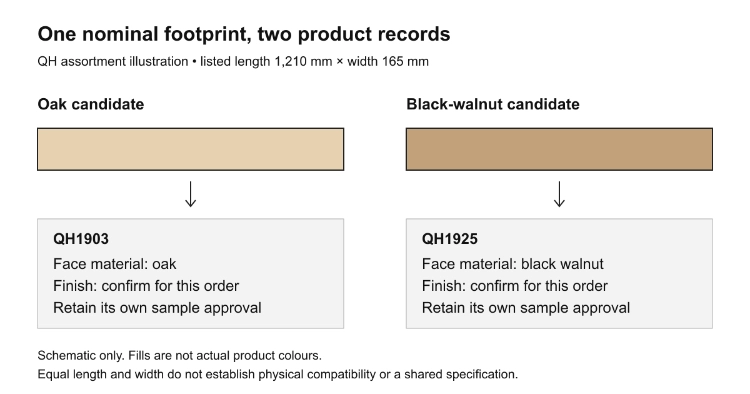
Start with QH1903 (oak) and QH1925 (black walnut) as possible candidates. Both share the listed plank dimensions, allowing the sales team to compare their surfaces side by side without changing the nominal display footprint. The comparison is about the assortment. Thickness and construction still need checking for the order, and there is no basis here for treating the two products as physically interchangeable.
| Assortment field | Oak candidate | Black-walnut candidate |
| Example product | QH1903 | QH1925 |
| Named wood | البلوط | Black walnut |
| Listed length | 1,210 mm | 1,210 mm |
| Listed width | 165 mm | 165 mm |
| Finish for proposed order | Confirm separately | Confirm separately |
| Sample approval | Retain under QH1903 | Retain under QH1925 |
The table identifies a possible pair for discussion. It does not establish current stock availability or an agreed order specification. Those details belong in the supplier’s response before the distributor commits to either line.
What the oak selection contributes
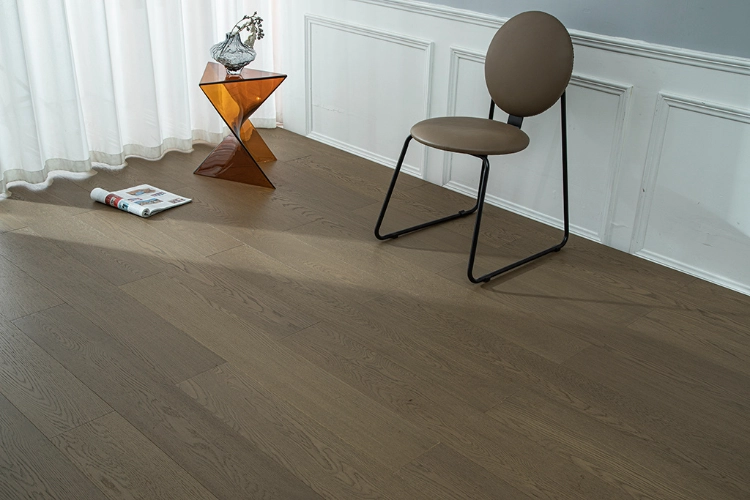
YEHUI’s oak QH collection offers several finish options for dealers looking to build a varied wood flooring display. QH1902 and QH1906 feature warmer yellow-brown tones, while QH1901 has a paler appearance. QH1905 offers a darker look, and QH1903 has a muted grey-brown surface. For a different visual style, QH1909 features a pale cream appearance with darker grain lines. These options allow dealers to compare different oak finishes before deciding which sample works best alongside the black-walnut selection.
A general request for a “light oak option” would leave the supplier guessing which appearance the buyer means. Select the model first, then check whether the finished sample works alongside the chosen walnut option. The QH1903 flooring product provides a specific reference for the discussion, but the current finished sample should determine the approved appearance.
What the black-walnut selection contributes
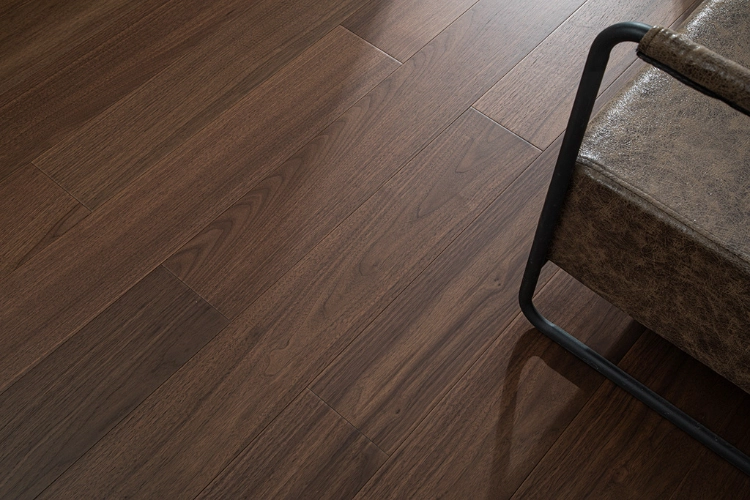
YEHUI’s black-walnut QH collection offers three distinct appearance options. QH1921 features a warmer brown tone, QH1923 has a more subdued grey-brown appearance, and QH1925 provides a deeper brown finish. These choices give dealers flexibility when deciding how much visual contrast they want between the walnut and oak samples. All three models share the same listed length and width as the oak QH planks, making side-by-side comparisons easier.
QH1925 is only one possible partner for the oak sample. If the two samples do not create the desired contrast, dealers can also consider QH1921 or QH1923. Product photographs can help narrow the selection, but final colour approval should always be based on an actual sample. A pictured tone cannot specify the appearance of every board in a shipment.
Decide whether the two appearances earn separate places
The display space has to earn its keep. Look at enquiries that the existing range could not answer. Were customers asking for a different tone, or was the available plank format the problem? Those notes give the buyer something to test against the new samples. A species name alone cannot show whether either gap has been filled.
Compare a chosen pair, not two species labels
Suppose both samples look attractive on their own. Once placed together, however, they seem too close in appearance for the sales team to explain why both are needed. That is a reason to try a different partner before placing the order. Keeping just one is also a reasonable outcome of the review.
A very different-looking pair raises another question for the sales description. What can the salesperson actually say? The approved colour and named wood are useful distinctions. A claim that one is harder, higher grade or better wearing would need its own product evidence. There is no need to invent that ranking to explain a choice of appearances.
Keep finish and face material in separate fields
“Brown” is too little information for a stock record. It could describe either sample. Keep black walnut or oak in the wood field, then enter the agreed finish beside it. When a sample label is copied into a quotation, check that both fields survive the move.
YEHUI’s production includes fine sanding, sizing, surface treatment and lacquer finishing, alongside cutting, drying and moisture control. The buyer is reviewing the result of those operations. Ask for the finish attached to each quoted code. If a finish has changed since the sample was made, that needs settling before the old sample becomes the approval reference.
Build two sample records within one range proposal
Prepare Comparable Samples for Review
YEHUI provides product consultation and offers design, measurement and sampling support. Its customization service takes account of the customer’s budget, style, dimensions and requirements. For this buying task, the request should describe the proposed two-species range and ask for the actual candidates to be reviewed together.
Ask for comparable sample sizes and view them under the same conditions. An old display piece may be convenient to hand, but check its reference before using it in the review. The supplier may now be quoting a different finish. Comparing those two without checking would answer the wrong question.
The existing دليل مقارنة عينات الأرضيات supports the broader review. For this enquiry, leave the review with a decision against each code. A comment such as “pair looks good” is hard to use later if somebody asks which of several sample versions was accepted.
Maintain Separate Approval and Quality Records
Keep the samples together for the range review, with a record for each. Code, face material and finish belong on that record, along with the relevant supplier reply. A colleague opening the file later should be able to identify the approved oak sample without having to interpret a comment about the walnut one.
YEHUI combines machine checks with manual inspection, covering dimensions, thickness, moisture content and stability. Ask how each of the two ordered products will be identified against its specification. The general inspection process cannot decide which finish the buyer intended or whether a different code would be an acceptable substitute.
YEHUI’s packing process includes inspection and screening of individual flooring pieces before packing. Its production controls extend from raw-material procurement through to the inspection of finished products. For a two-species assortment, the buyer should still request distinct product identification on the packing information so both lines can be recognized when received.
Price and stock each SKU on its own terms
List QH1903 oak flooring and QH1925 black walnut flooring separately in the enquiry, with the proposed quantity for each. Confirm the unit price, carton quantity, MOQ and lead time individually. Keep the supplier code, sample reference and product image linked to the correct wood description to avoid mix-ups during quotation and order processing.
Opening quantities do not need to be divided equally. Use existing sales, customer enquiries and stock budgets to determine the initial allocation. Ask YEHUI to confirm mixed-order availability, minimum quantities and replenishment terms before finalizing the purchase.
Send a paired enquiry with two independent decisions
An enquiry naming QH1903 oak flooring alongside QH1925 black-walnut flooring should explain the intended relationship between the two products. The purchasing team can attach two labelled sample references and show the proposed quantity for each.
The reply may leave both candidates approved, just one accepted, or a new sample still to come. Record that outcome against the individual codes. If walnut is changed, the team can revisit how the pair looks together while retaining the oak approval already on file. That gives the next enquiry a clear starting point.
الأسئلة الشائعة
Can Oak and Black Walnut Flooring Have the Same Dimensions?
Yes. YEHUI’s QH1903 oak and QH1925 black walnut planks both have a listed length of 1,210 mm and width of 165 mm. However, their construction, face material and finish should be checked separately before ordering.
Should Dealers Display Oak and Black Walnut Flooring Together?
Displaying both species together allows customers to compare their wood tones and grain patterns side by side. Dealers should use approved samples under consistent lighting and keep each model’s product code and finish clearly identified.
How Should Dealers Plan an Initial Order for Two Flooring Species?
List each product code and quantity separately in the enquiry. Consider existing sales, customer demand and available stock budgets when allocating quantities. Confirm MOQ, carton quantity, mixed-order availability, lead time and replenishment terms with YEHUI before placing the order.


 Arabic
 English
 Spanish
 French
 German