

In the modern flooring sector, the word “quality” sees frequent use these days. Numerous engineered wood floors appear striking upon initial view, but their enduring functionality frequently reveals a contrasting narrative. Authentic quality does not rely solely on outward charm. Rather, it emerges from the framework, material selections, production rigor, and the way each level interacts across the years.
As an established flooring producer, يهوي examines engineered wood flooring through a holistic lens. Offerings like QH1901, QH1902, and QH1903 embody this outlook, in which aesthetics, build, and durability integrate into a cohesive unit instead of isolated components.
The five aspects outlined below clarify what genuinely establishes the caliber of engineered wood flooring, particularly for sustained home installations and task-oriented uses.
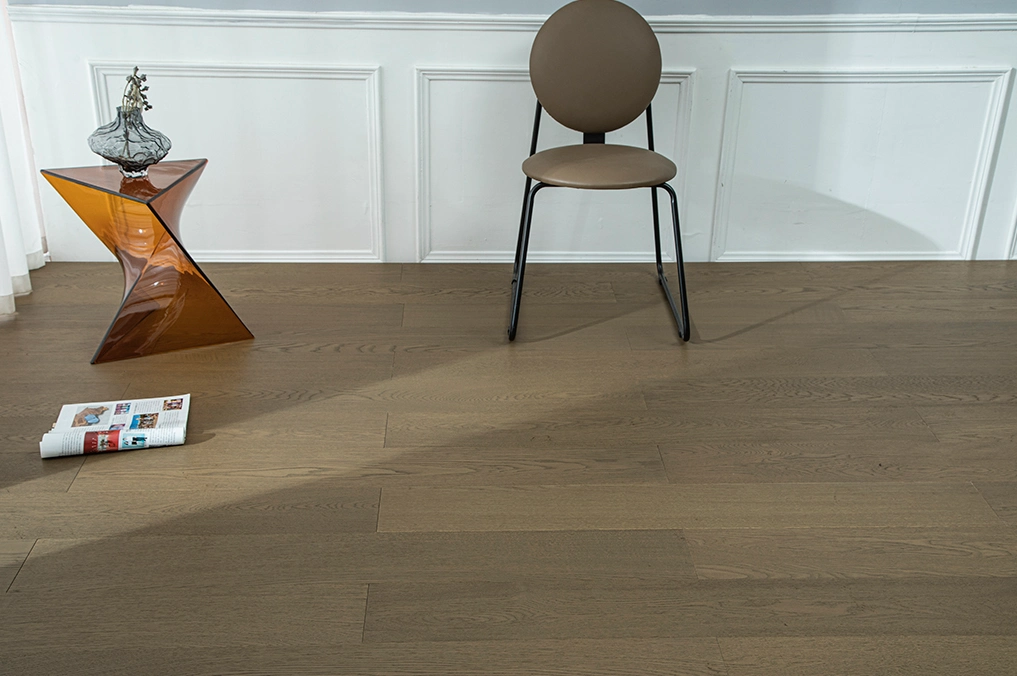
1. What Makes the Core Structure of Engineered Wood Flooring Truly Reliable?
Prior to addressing outer elements or coatings, one must always peer below the exterior. The inner framework of engineered wood flooring determines its conduct as time progresses.
Multi-Layer Cross Construction Stability
A sturdy engineered floor originates from a thoughtfully crafted multi-layer arrangement. This cross-layer approach enables every stratum to offset inherent wood expansion, thereby assisting the plank to sustain size steadiness in typical interior settings.
YEHUI crafts its QH1901, QH1902, and QH1903 with multi-layer cross construction, and in this setup, each stratum fulfills a distinct build function. Consequently, such an arrangement minimizes inward pressure and ensures planks stay level and uniform throughout various areas and climatic shifts.
High-Quality Hardwood Veneer Selection
Veneer caliber extends beyond mere species type. Uniform thickness, pattern orientation, and assessment criteria all contribute significantly. Irregular or unsteady veneers commonly result in aesthetic discrepancies and prolonged operational concerns.
The QH1901–QH1903 range employs meticulously chosen hardwood veneers, featuring oak as a primary substance option. Emphasis rests not on overstated pattern displays, but rather on genuine feel and dependable outer conduct.
Precision Manufacturing and Tolerance Control
Superior substances may still falter absent exact production methods. Strict limit oversight in compression, slicing, and polishing remains crucial for the merit of engineered flooring.
YEHUI’s fabrication method highlights precision in every phase, guaranteeing steady plank measurements and even stratum adhesion. Moreover, this uniformity proves particularly vital for expansive or recurring endeavors where lot dependability is essential.
2. How Do Materials and Adhesives Affect Long-Term Flooring Performance?
After establishing the framework, the substances that unite all components emerge as the subsequent vital element. Binders and auxiliary substances typically evade attention, although they dictate a floor’s resilience through the passage of time.
Certified Low-Emission Adhesive Systems
Binders occupy a pivotal position in engineered flooring. Subpar adhesion may cause inner delamination or exterior problems as years unfold, which underscores the importance of verified, minimal-release binder frameworks.
YEHUI employs binder options compliant with worldwide evaluation norms, thereby bolstering both build durability and interior atmosphere standards routinely demanded in international arenas.
Sustainable Wood Sourcing Standards
Substance uniformity commences well ahead of fabrication. Timber procured from ethically overseen woodlands generally delivers more foreseeable outcomes, notably within constructed assemblies.
YEHUI favors timber from lawful and eco-conscious origins, which fosters extended supply reliability while harmonizing with ecological norms prevalent in broad marketplaces.
Balanced Material Matching Across Layers
Effective engineered flooring hinges on equilibrium. The veneer, base strata, and rear substances need to collaborate harmoniously, avoiding rivalry among themselves.
Within the QH1901, QH1902, and QH1903 collection, substance pairings get curated to align mass, humidity reaction, and build dynamics, enabling the floor to operate as an integrated whole as opposed to disjointed strata.
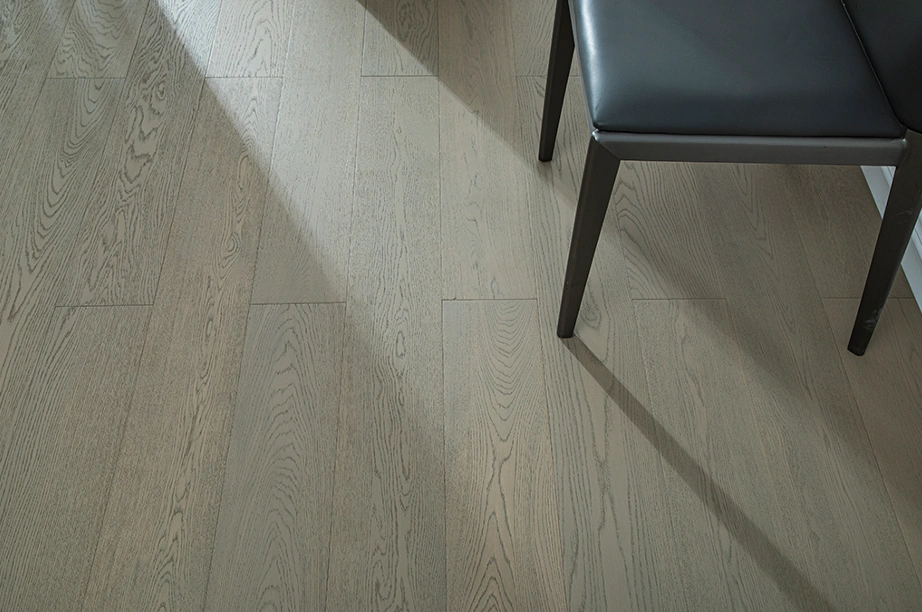
3. Why Is Moisture Balance a Key Indicator of Flooring Quality?
Humidity-influenced functionality persists as a prevalent obstacle in wood flooring contexts. Superior engineered flooring confronts this matter via oversight rather than mere assurances.
Controlled Moisture Content Management
Overseeing humidity levels amid fabrication constitutes an indispensable procedure. Timber excessively arid or saturated during improper phases might precipitate unsteadiness subsequently.
YEHUI regulates humidity quantities across the entire fabrication sequence, permitting planks to attain equilibrium prior to application of finishes, and this practice alleviates superfluous inward strain inside the floor.
Layered Stress Distribution Design
Humidity variations impact wood displacement. Multi-stratum engineered assembly facilitates the dispersal of such displacement throughout strata, eschewing focalization in a singular trajectory.
Furthermore, this stratum-based pressure dispersal serves as a primary explanation for the enhanced uniformity in engineered flooring’s execution amid diverse interior milieus.
Suitable for Diverse Indoor Environments
Engineered wood flooring gets tailored to accommodate routine interior circumstances, steering clear of harsh extremities. Hence, whenever humidity equilibrium and framework coalesce effectively, floors preserve aesthetic and build uniformity spanning assorted residential or business locales.
4. How Does Surface Design Reflect the Real Quality of Engineered Flooring?
Exterior shaping commonly captures initial observation, yet substantive merit manifests in the endurance of that exterior’s visual integrity over extended periods.
Natural Wood Texture Reproduction
Genuine tactile quality avoids dependence on intense optical manipulations. It derives from honoring inherent pattern progression and upholding aesthetic uniformity over planks.
YEHUI’s exterior processes concentrate on lifelike timber essence, permitting every strip to convey a natural essence without excessive refinement.
Color Customization Based on Project Needs
Color assumes a substantial function within spatial arrangement. Although conventional shades suffice for numerous implementations, certain undertakings necessitate bespoke color resolutions.
YEHUI facilitates color adaptation according to patron prerequisites and undertaking stipulations, providing adaptability devoid of dependence on inflexible color frameworks.
Finish Consistency Across Production Batches
Regarding undertaking procurers and vendors, uniformity holds paramount value. color discrepancies and coating variances across lots may undermine comprehensive assemblies.
YEHUI accords substantial priority to lot-to-lot uniformity, rendering items such as QH1901, QH1902, and QH1903 apt for successive procurements and sequential undertakings.
5. What Role Does the Installation System Play in Overall Flooring Quality?
Despite frequent oversight, the plank linkage mechanism sways the efficacy of engineered flooring as an integral exterior.
Precision Tongue-and-Groove Engineering
Precise tongue-and-groove contours assist planks in aligning accurately and sustaining exterior seamlessness. Meticulous fabrication diminishes avoidable interstices and optical deviations.
YEHUI formulates contour mechanisms to correspond with the build characteristics of multi-stratum planks, thereby endorsing prolonged exterior soundness.
Structural Compatibility With Engineered Boards
A connection system must work with the board structure, not against it. Poorly matched profiles can introduce stress points.
In the QH1901–QH1903 assortment, contour formulation evolves concurrently with plank assembly, enabling both facets to operate in innate concert.
Long-Term Performance Through System Design
When framework, substances, and linkage mechanisms synchronize, engineered flooring functions as a comprehensive entity. Merit then transcends singular attributes, hinging instead on the seamless collaboration of all constituents across durations.
خاتمة
Authentic merit in engineered wood flooring arises not by happenstance. It originates from dependable framework, deliberate substance curation, regulated humidity equilibrium, polished exterior formulation, and systemic deliberation.
YEHUI’s engineered flooring offerings, exemplified by QH1901, QH1902, and QH1903, illustrate this unified methodology. Eschewing emphasis on solitary traits, merit constructs via equilibrium, uniformity, and sustained functionality anticipations.
For procurers, spatial artisans, and collaborative associates, comprehending these five aspects simplifies appraisal of engineered wood flooring surpassing superficial perceptions and transient allure.
التعليمات
Q1: What is the main difference between high-quality and average engineered wood flooring?
A: The disparity predominantly resides in framework formulation, substance equilibrium, and fabrication exactitude over mere aesthetics.
Q2: Are YEHUI engineered flooring products suitable for project-based applications?
A: Yes. Offerings like QH1901, QH1902, and QH1903 incorporate lot uniformity and build durability considerations, rendering them appropriate for domestic and modest commercial initiatives.
Q3: Can engineered wood flooring colors be customized?
A: Color adaptation proves feasible pursuant to patron necessities and initiative demands, affording amplified versatility in formulation strategy.

 Arabic
  English
  Spanish
  French
  German